Parks Collecting contains affiliate links. If you make a purchase using one of these links, I may receive a commission, at no extra cost to you. See my Disclosure Policy for more information.
Angels Landing Zion National Park: Complete Guide to this Epic Trail
Angels Landing in Zion National Park is one of the most iconic in the USA. It’s also one of the scariest.
The last 0.5 miles that cross a narrow ridge with drop-offs thousands of feet high on both sides is what attracts thrill seekers – and the views from the end are breathtaking.
But I love the trail even without the last section. With the iconic Walter’s Wiggles switchbacks, the chilly Refrigerator Canyon, and amazing views for much of the way, this trail really has something for everyone.
You may have heard about the Angels Landing, Zion hike but aren’t sure exactly what to expect. That’s what this Angels Landing guide is for.
Here, I describe my experience and share photos I took every step of the way, so you know exactly what to expect.
Although the trail is easy to follow, the hike to Angels Landing is considered one of the most challenging hikes in the US, due to the drop offs in the last 0.5 miles. If this seems intimating, consider going with an experienced Angels Landing hiking guide.
This guided hike not only has someone to help coach you through the tricky bits, it also includes the permits you need. (Note, however, that it is non-refundable, so be sure you are sure before you pay).
The Zion National Park – Angels Landing Description
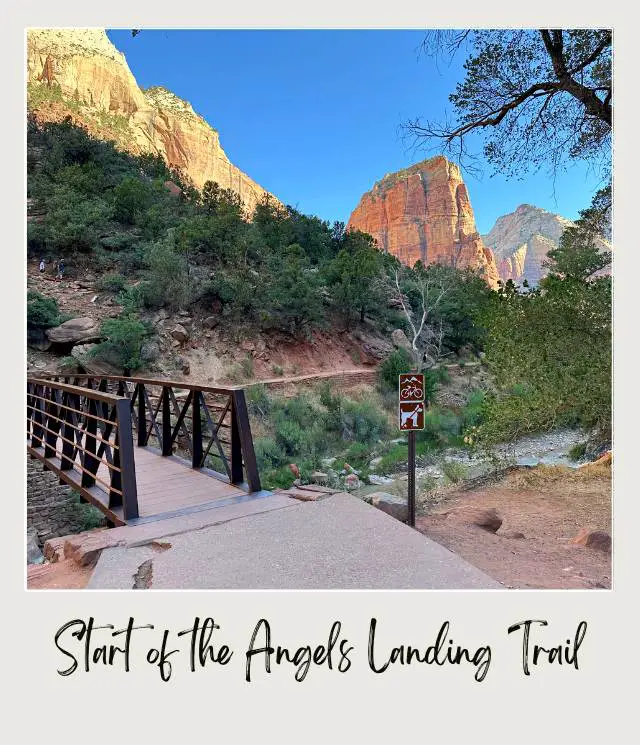
The trail starts at The Grotto shuttle stop. Cross the road at the pedestrian crossing and follow the paved path to the river. Cross the bridge over the Virgin River.
As soon as you cross the bridge, the path goes left and right. Left is the Kayenta Trail to Emerald Pools. Go right.
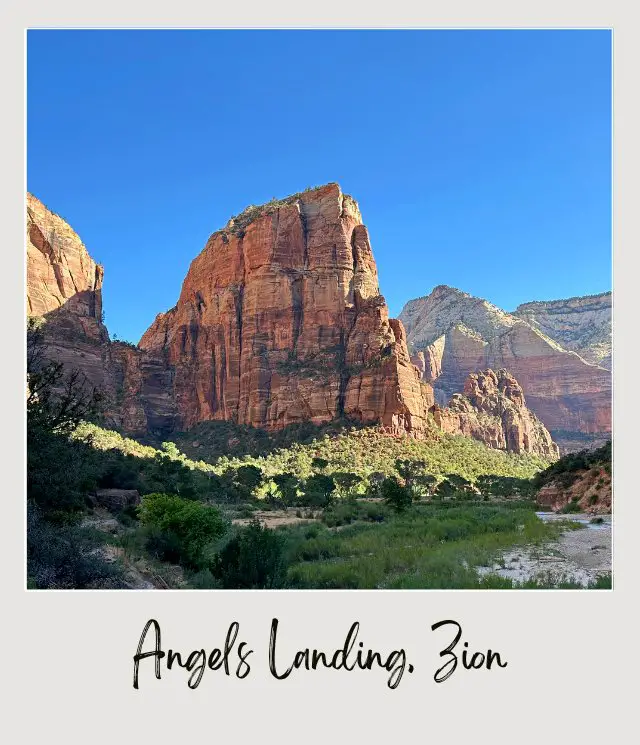
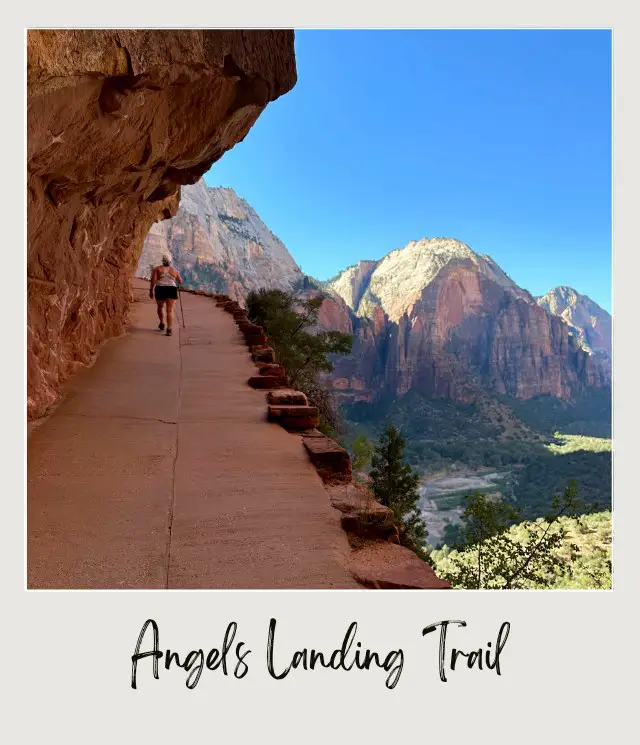
The trail is paved and starts flat as it goes alongside the river for a short way. The view here is actually one of my favorite views on the trail – you can see Angels Landing towering up ahead, so you can get a real sense of the scale and steepness.
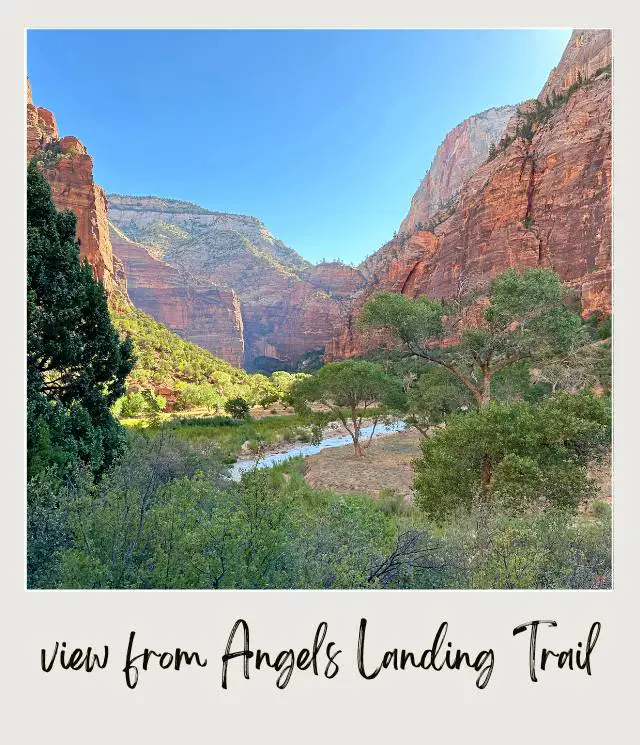
Turn around and look back (though this is also the view on your return). The canyon is just as spectacular in the other direction.
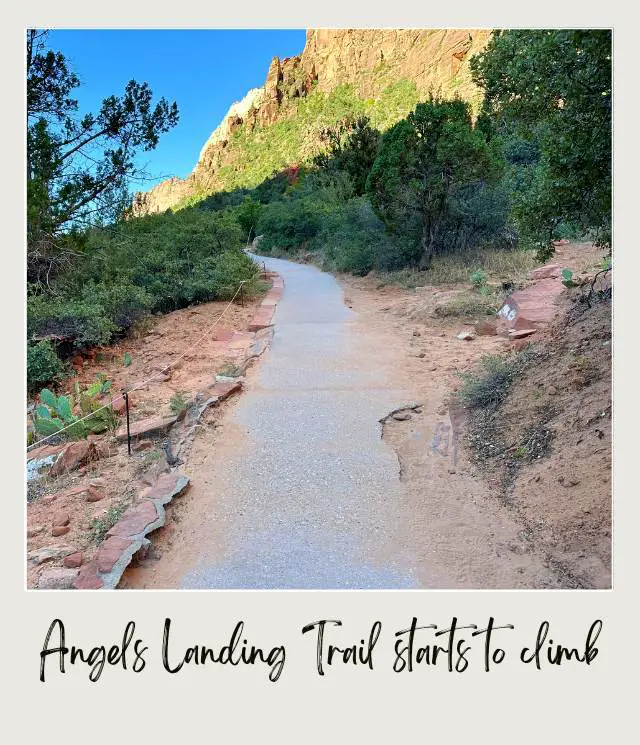
After about 10 minutes, the trail veers left and starts to climb fairly gently.
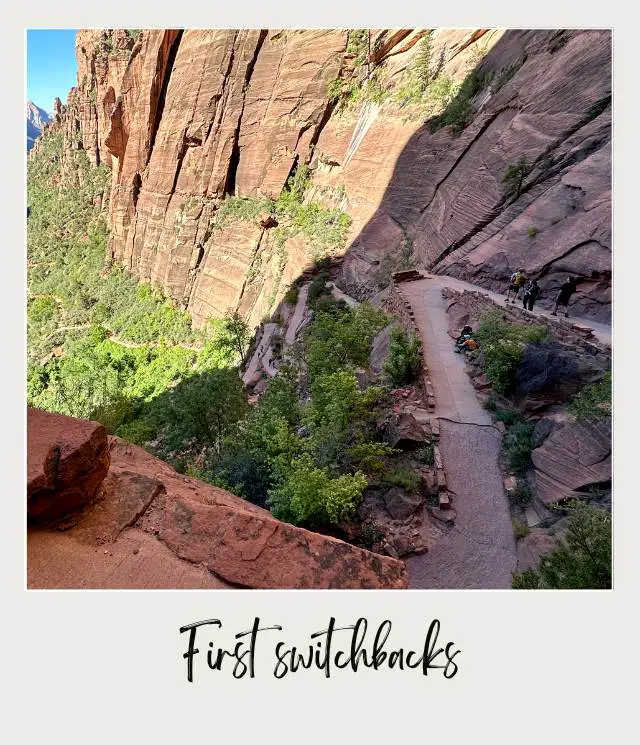
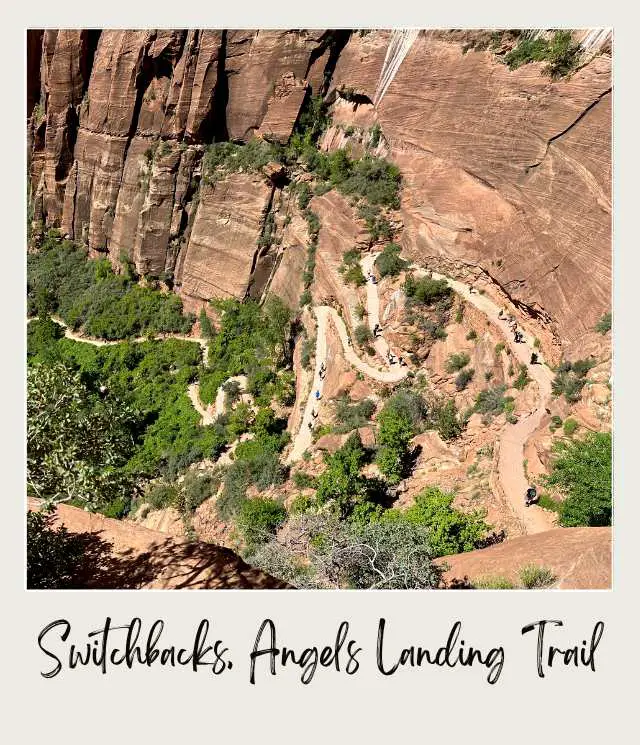
Another 5 minutes or so and you’ll get to the first Angels Landing switchbacks. These are widish switchbacks, but somewhat steep and have a steep drop-off on one side.
You can see the switchbacks here.
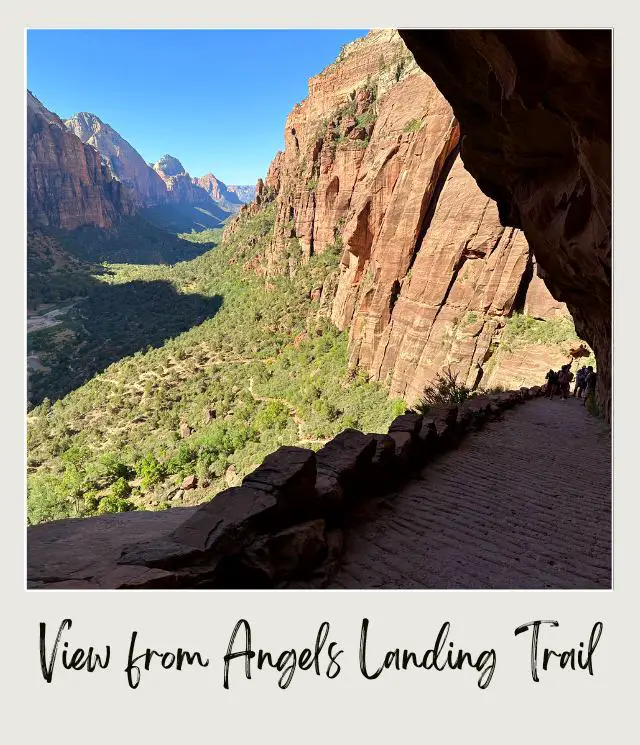
I really loved the views looking down Zion Canyon here.
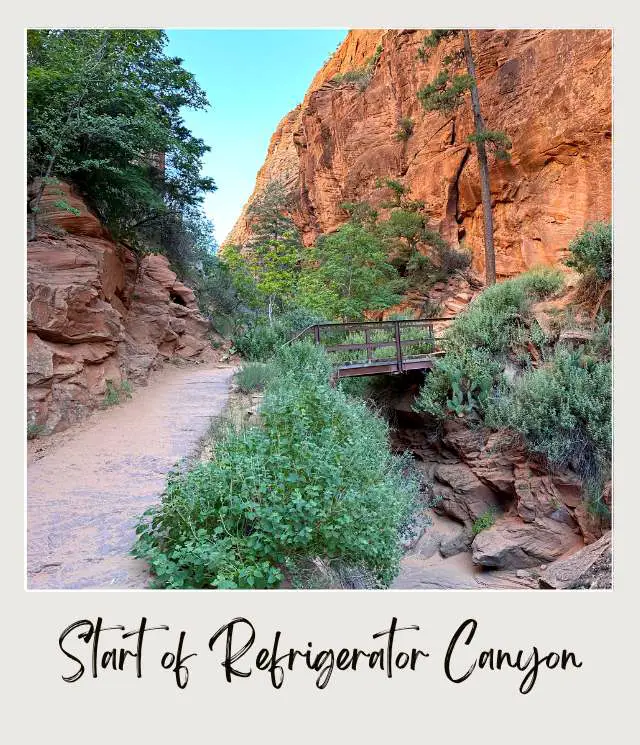
About half an hour into the hike, you’ll reach the top of the first switchbacks and cross a small footbridge.
Refrigerator Canyon
This is the start of Refrigerator Canyon. Depending on the time of year, you may see a sign stating that this is a Quiet Zone because Mexican Spotted Owls live in the canyon and loud noise disturbs them.
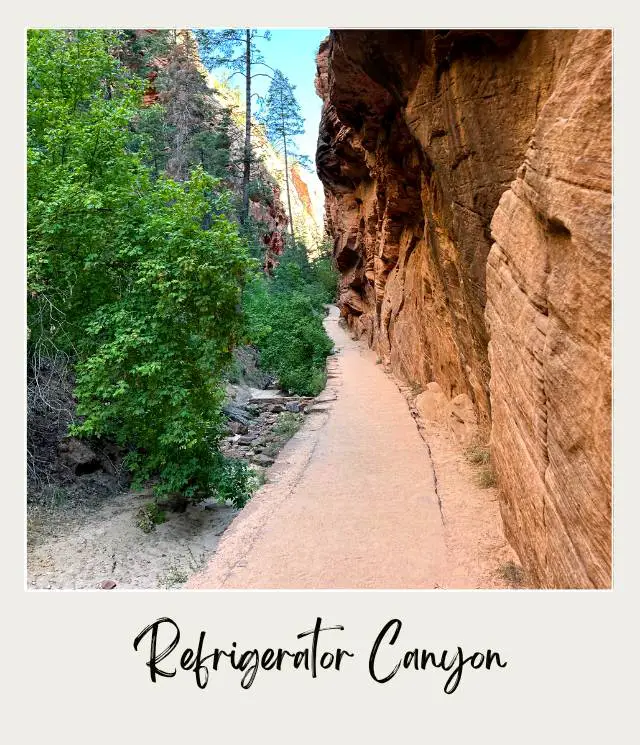
The canyon lives up to its name – it’s shady and cool even in summer.
The trail runs alongside a gully right next to the steep canyon wall. And is flat, which makes a nice break from all that ascending.
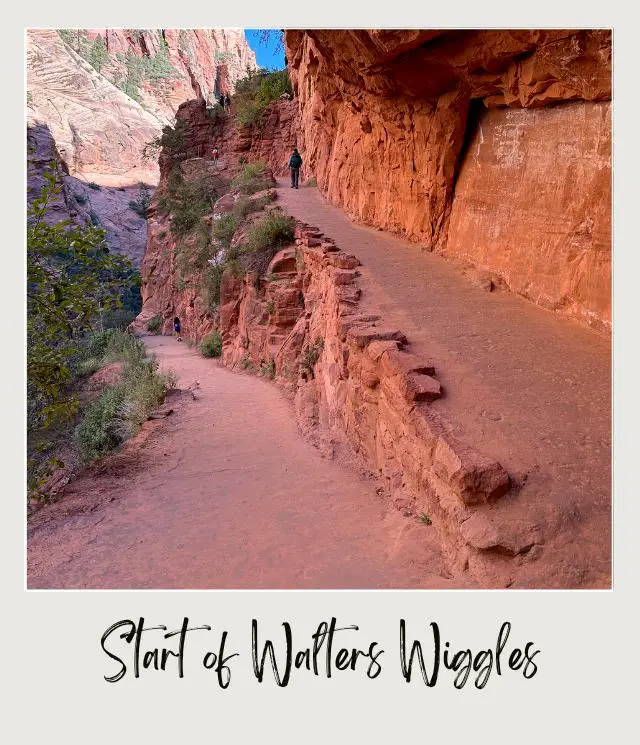
It takes about 10 minutes to go through Refrigerator Canyon. At the end is the start of Walters Wiggles. You’re now about 1.8 miles into the hike.
Walters Wiggles, Angels Landing
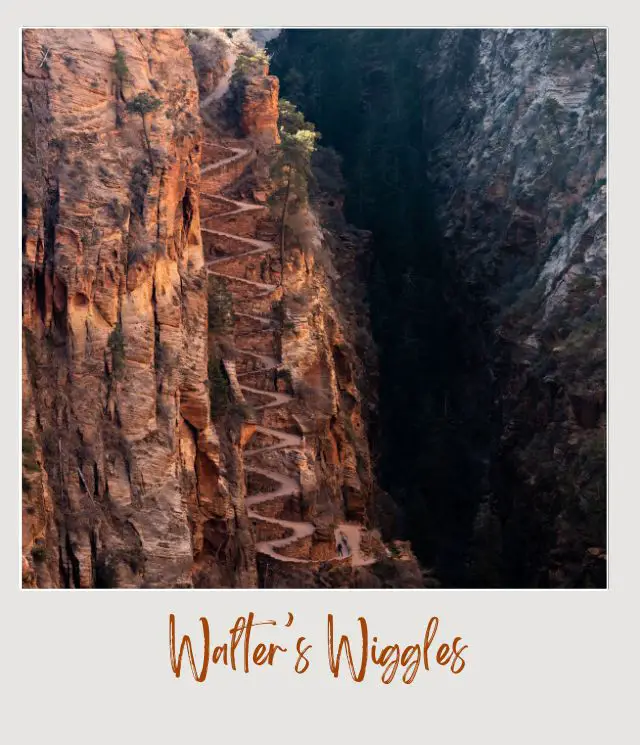
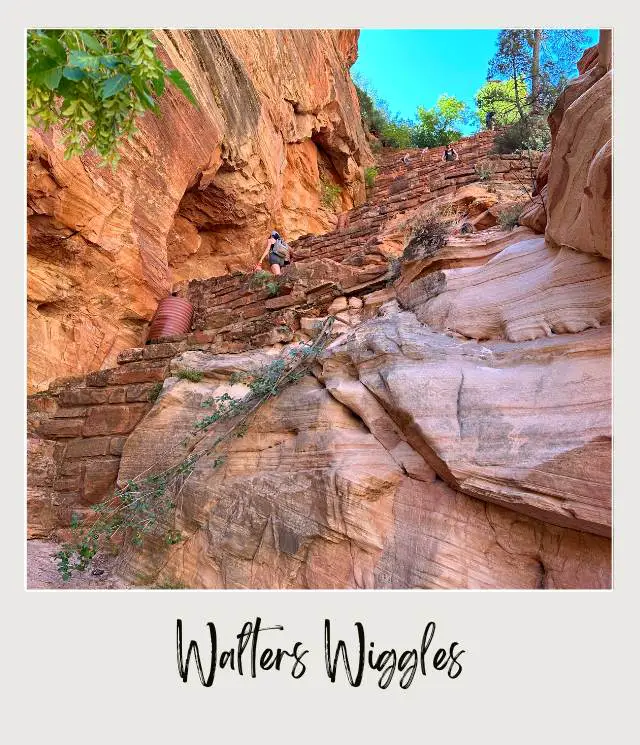
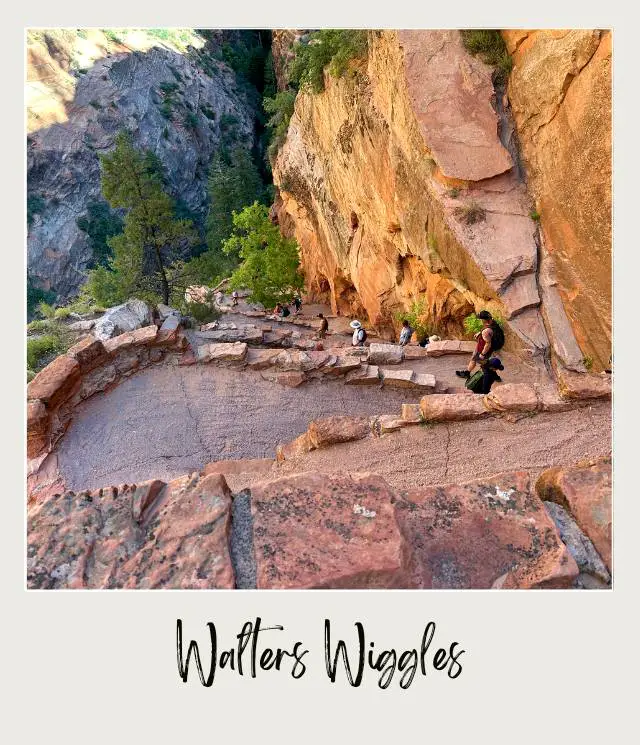
Walter’s Wiggles is a set of 21 short but steep switchbacks that ascend 250 feet in a very short distance. They take their name from Walter Ruesch, Zion National Park’s first superintendent, who had the idea back in 1926 of carving this series of switchbacks out of the sheer cliff face.
They wiggle their way up to Scouts Landing.
They sound cute, but don’t feel cute when you’re on them. It’s a lot of uphill in a short distance. So, take your time and stop to catch your breath as you need to.
I didn’t mind the ascent so much, but I didn’t like the sand on the paved trail. They were paved back in 1985 to prevent erosion, but there’s a thin layer of sand on parts of them – and they’re pretty steep, so I was nervous about going down them.
I was OK in the end, but took it very carefully, as I didn’t want me feet slipping out from under me.
It took me about 10 minutes, but if you stop to catch your breath, it may take you longer.
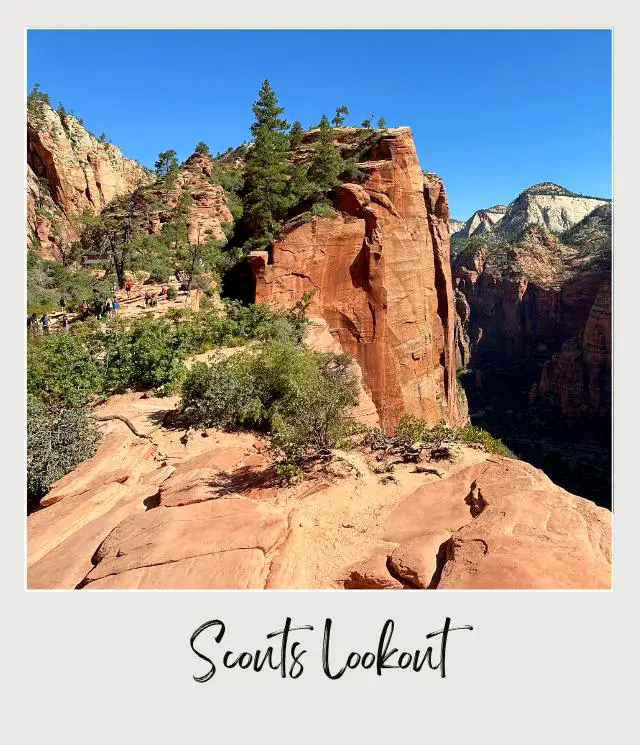
When you get to the top, you’ll be at Scouts Lookout.
Scouts Lookout
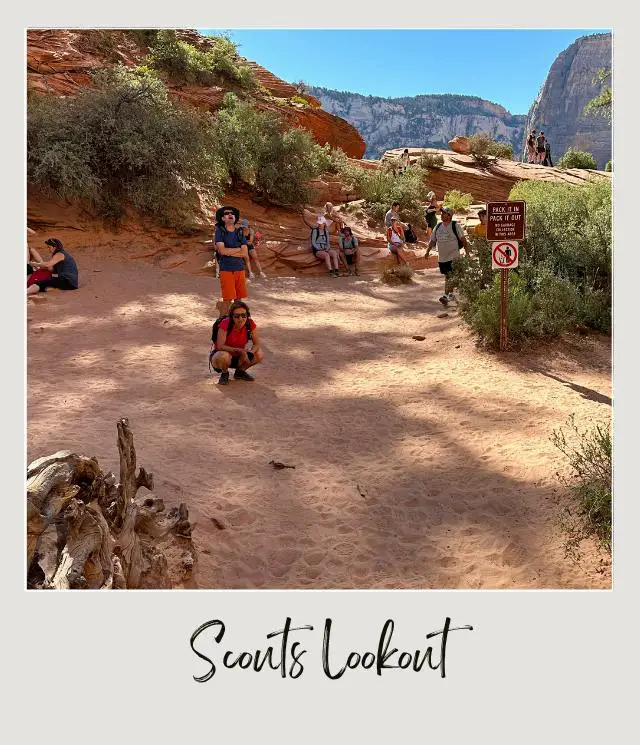
There are (rustic) restrooms at Scouts Lookout.
Here is where the West Rim Trail goes straight/ left and the side trail to Angels Landing is to the right.
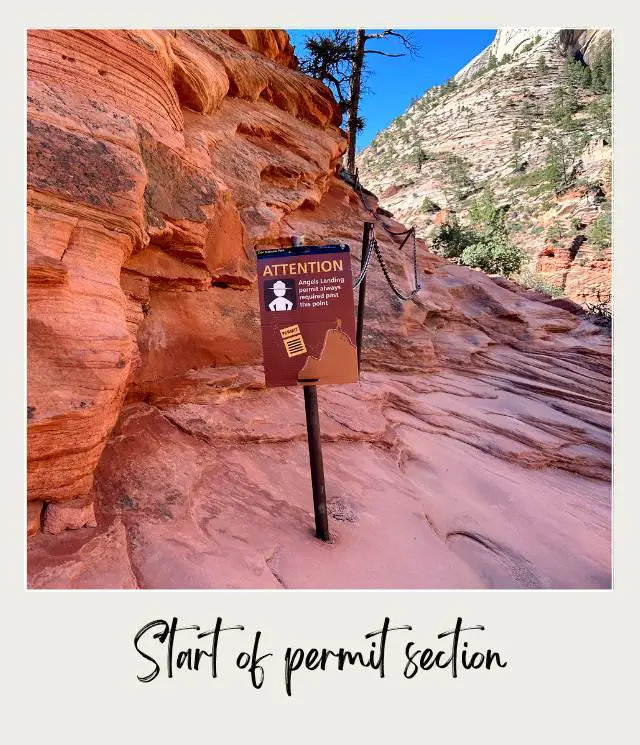
It’s 0.5 miles from Scout Lookout to Angels Landing and this is the section that you need a permit for. This is also the section with a chain so you can hold on as you traverse a narrow trail with drop-offs on both sides over 1,000 tall.
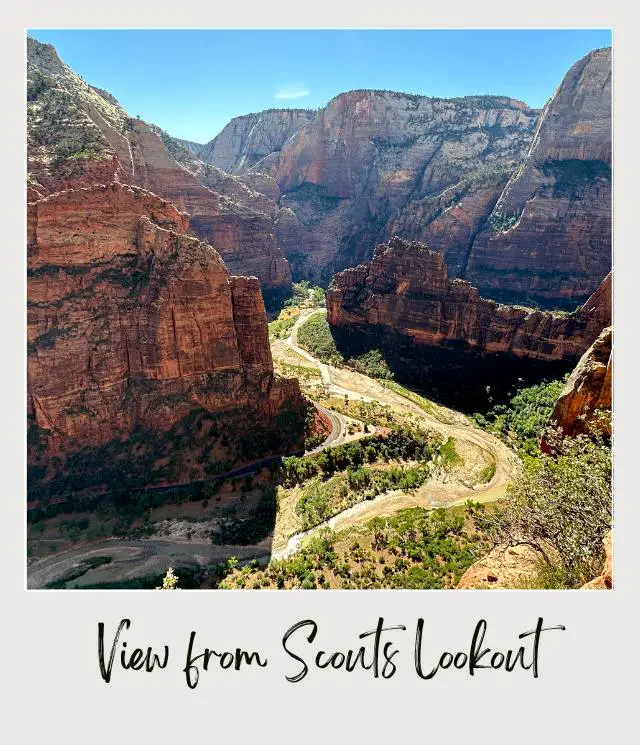
The view from Scouts Lookout is also great. I actually really love the hike up to here.
This is the view looking deeper into the canyon.
I will say this – if you’re afraid of heights and don’t want to do the last section – or if you didn’t secure a permit – the hike to Scouts Lookout is awesome.
But many people are here for the chain section!
This is the view of Scouts Lookout from near the start of the chain section.
There’s a small sign at the start of the section, warning of its intensity. Nearby is another sign warning that permits are required. There’s usually a ranger stationed here to check your permit for the final section.
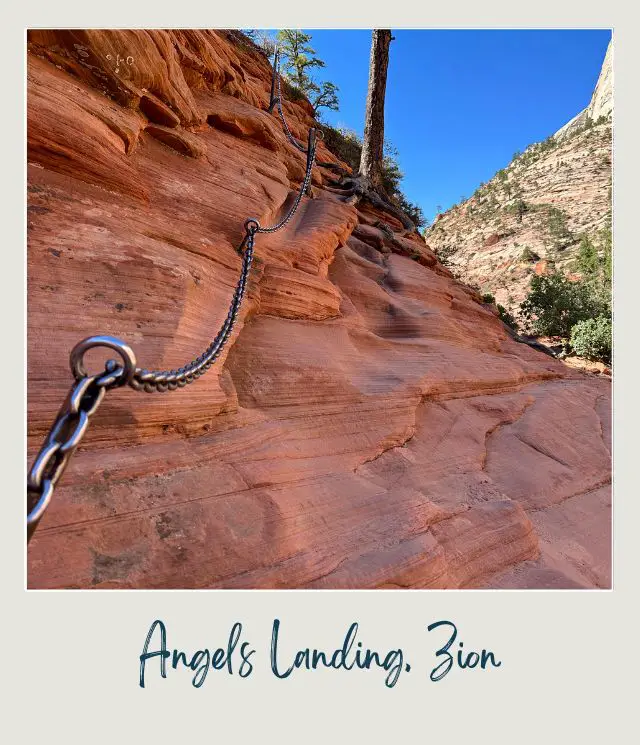
As soon as you pass the sign, the chain starts. This first section has steps carved into the side of the cliffside, so it seems particularly nerve wracking (to me, anyway).
Definitely hold onto the chain unless you’re feeling very stable – I saw a woman coming back down slip on this section and thank goodness she was holding on.
Of course, you need to pass people, but I found people very understanding of others with less comfort than them (read: me).
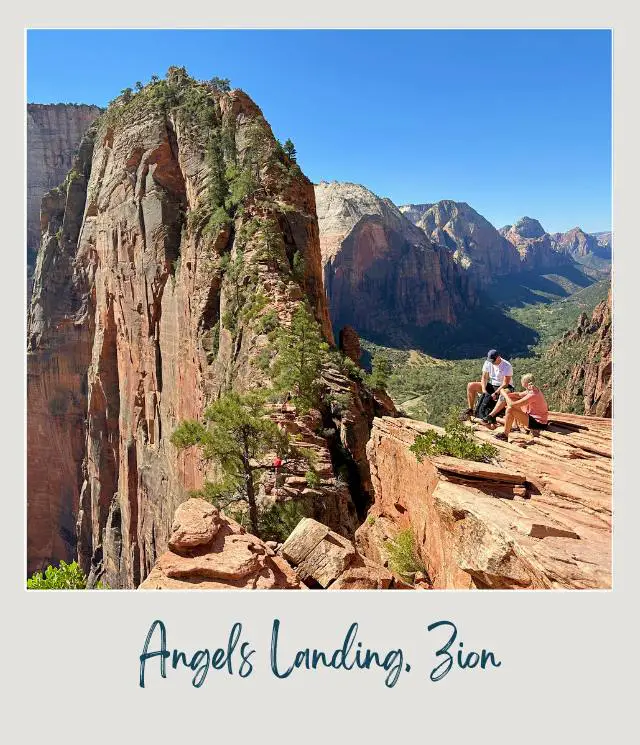
After about 10 minutes, the trail stops being on the side of the cliff and opens up to a flat section. There’s an amazing view of the Angels landing and the rest of the trail from here. I really enjoyed staying here and gathering my thoughts, having a sip of water and watching everybody climbing and down the steep trail along the ridge.
If you found the first 10 minute too much, I’d turn around here. People do.
After leaving that flat section, it’s uphill. The path is actually a little wider than it seems when you’re looking at from afar, and the chain is there and steps are cut into the path. But it still involves drops offs thousands of feet high on both sides and is all uphill until you get to the top of Angels Landing.
You may have gotten a buzz from the thrill of the last 0.5 miles or you may have pushed through your fears, but either way, there is no denying that the view from Angels Landing is worth the effort.
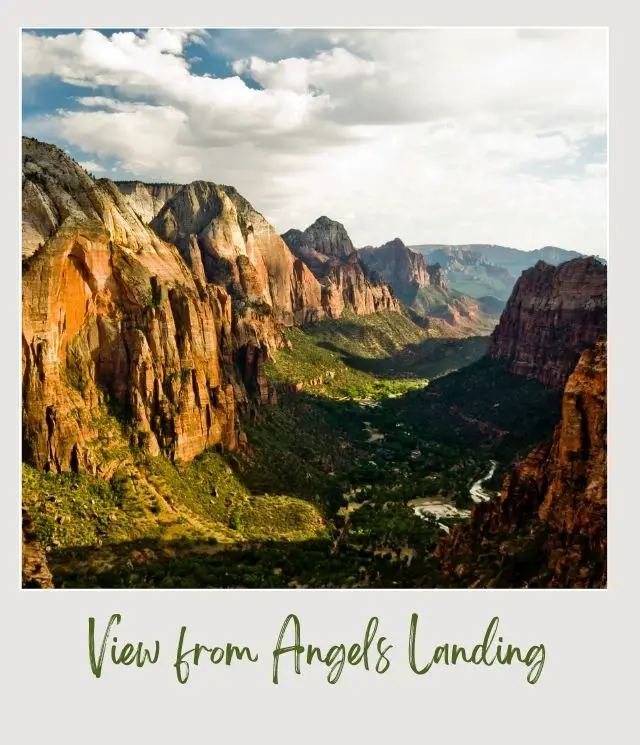
There’s a clear view down the length of Zion Canyon. Take your time, have a snack or small picnic and soak in the view!
And, of course, then you have to do the whole hike in reverse.
Angels Landing Trail Map
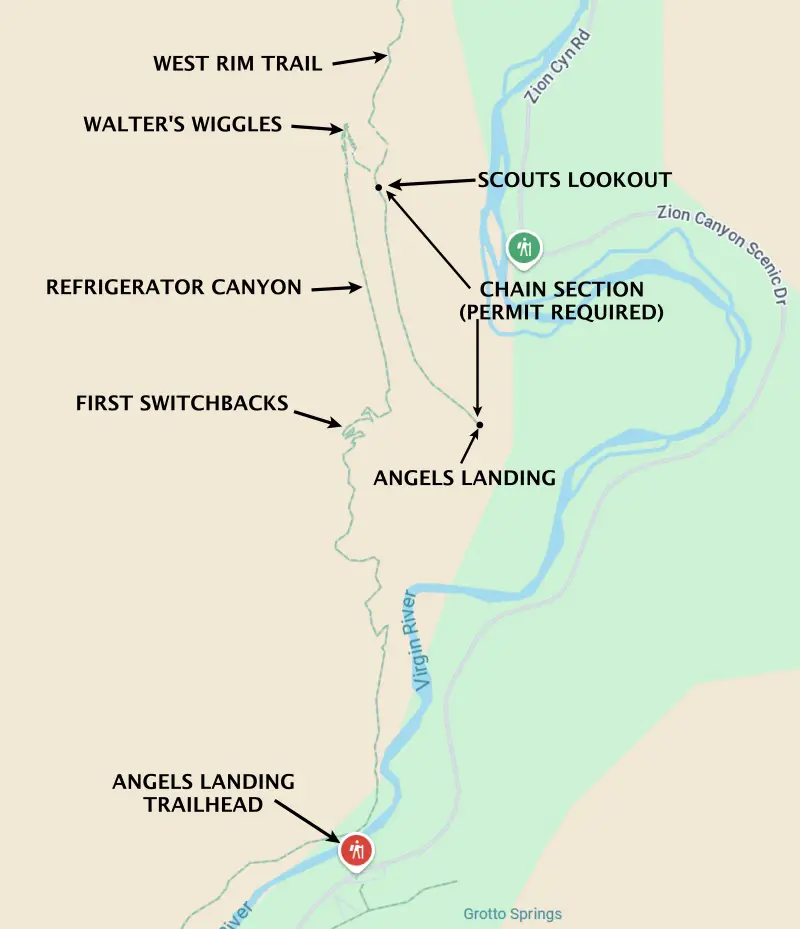
Here’s an Angels Landing Map that will give you an idea of where you’re going. The trail is paved until Scouts Lookout and very easy to follow.
✨ PUTTING IT ALL TOGETHER ✨
Learning all about the Angels Landing Trail is a great thing to do, because it will make the hike easier and much more enjoyable.
However, it’s just one of the many amazing hikes in Zion National Park. And it can be really difficult to know what they all are and how to put them all together for your trip.
As you can see, there’s a lot to know about this one hike alone. It’s even harder to coordinate all the other hikes you want to do and all the other things to see and do in Zion into an itinerary that actually makes sense – so you’re doing the hikes and activities you want to do and seeing all the views you want to at the right time of day, joining them all together in a logical order, and managing all the logistics that makes them happen.
To help take away the overwhelm of planning a trip to Zion National Park, I’ve created several super detailed itineraries.
There are 1-, 2-, and 3-day options for Zion National Park: all with detailed hour-by-hour schedules, including alternatives for different activity and fitness levels, plus trail maps and descriptions, driving instructions, important information, essential tips, and everything else you need to make the most of your time in Zion National Park.
The itineraries will help you make the most of the time you have available. The hike to Angels Landing is included as an option in all the itineraries. And there are also built in options for a shorter version. As well as options for people you’re traveling with who prefer not to hike.
It typically takes about 3.5 hours to hike Angels Landing.
How long is the Angels Landing hike, Zion National Park?
The Angels Landing hike is 4.3 miles in total out-and-back.
Have there been any deaths at Angels Landing, Zion National Park?
As of 2024, 18 people have died at or near Angels Landing in Zion National Park.
Where is Angels Landing located?
Angels Landing is in Zion National Park in Utah. The trailhead is The Grotto shuttle stop.
How difficult is Angels Landing hike?
Angels Landing is considered a challenging hike. It’s mostly uphill/downhill and the last 0.5 mile is very scary if you’re afraid of heights. People have died on this trail!
What is the hardest part of Angels Landing?
The hardest part of Angels Landing is definitely the last 0.5 mile, where the trail is steep, narrow and has drop offs on both sides. There’s a chain you can hold on to.
What time is best to hike Angels Landing?
If you can get a permit before 9:00am, you’ll beat the heat in summer, and have a chance to get there early enough to beat the worst of the crowds.
However, if you get a permit for after 9:00am, I recommend starting the trail at 9:00am or leave it until late afternoon. The trail is exposed and very hot in the heat of summer days.
If you do a late afternoon hike in summer, make sure you’re back to catch the last shuttle.
During most of the year, you can’t drive to the trailhead. Instead, you need to park at the Visitor Center or in Springdale and take a shuttle to The Grotto stop.
In the few winter months where there’s no shuttle and you can drive through the park, there’s a small parking area near the trailhead. This fills early, even in winter!
Is there camping near Angels Landing?
The nearest campgrounds are Watchman Campground and South Campground, which are next to each other, just inside the park’s main entrance.
You should definitely get travel insurance for your Angels Landing hike. This can protect you not only against medical and emergency repatriation, but can also cover things like trip cancellation, loss and/ or theft of property, etc. Be sure that your insurance policy includes coverage for hiking!
If you’re planning to visit Zion National Park by yourself, make your planning easy and stress free with a detailed itinerary. I have 1-, 2- and 3-day itineraries for Zion National Parkthat include all the park highlights, give you choices based on your preferred activity level, and take all the stress out of planning your trip.
Do you have questions about the trail to Angels Landing, Utah? I’d love to hear about them. Join my private Facebook group National Parks Collectors and comment and let me know (you can also pick up extra planning tips, share your photos and stories with other national park lovers and more).
If you liked this guide to the Angels Landing trail in Zion National Park, Pin It to your Zion National Park board!
James Ian is a national park, camping and hiking expert.
He has dedicated his life to travel, visiting more than 80 countries, all 7 continents and most of the national parks in the United States. With over 35 years experience in the travel industry, James has worked on cruise ships, at resorts and hotels, and as a travel planner who’s helped hundreds of people plan successful trips to US national parks.
Based on his experience visiting our national parks multiple times, in-depth research and expertise as a travel planner, James has published detailed itineraries for many of the major national parks in the US. These itineraries, as well as in-depth park guides, and other resources will help you have your own incredible trip to US national parks without stress and hassle.
As a national park expert, James has contributed to many publications, including USA Today, Newsweek, Time Business News, Savoteur, Best Trip, and Wired.