

December brings rain-soaked rainforests, snow-covered mountains, powerful waves, and wonderfully quiet trails to Olympic National Park. Because the park stretches from the Pacific coast to high alpine terrain, winter conditions vary dramatically from one area to another.
You might walk beneath dripping moss in the Hoh Rain Forest, watch enormous waves crash near Kalaloch, and find deep snow at Hurricane Ridge—all during the same trip.
Visiting Olympic National Park in December requires flexibility. Some mountain roads and visitor facilities close for winter, storms can interrupt travel, and daylight is limited. However, travelers who come prepared will find peaceful scenery and a fascinating range of winter landscapes.
‼️ If you just want a quick snapshot about my thoughts on the best time to visit Olympic National Park, check out my Best Time to Go To Olympic National Park guide.‼️
🛏️TOP HOTEL IN NEARBY FORKS: Check availability now
🛏️TOP HOTEL IN PORT ANGELES: Check availability now
🚘FIND THE CHEAPEST CAR RENTAL: Search Discover Cars for the best deals
✈️FIND THE CHEAPEST FLIGHTS: Search Skyscanner for the best deals
🧳GET TRAVEL INSURANCE: Get insured with Travelex before you go
📱TAKE AN AUDIO TOUR: Buy an audio tour now
Table of Contents
Visiting Olympic National Park in December
Winter arrives differently across the Olympic Peninsula. Snow accumulates in the mountains, while lower-elevation forests usually receive cold rain. Along the Pacific coast, winter storms create rough seas, strong winds, and dramatic skies.
Most visitors exploring Olympic National Park in December focus on the park’s lower-elevation destinations. Popular options include:
- Hoh Rain Forest
- Lake Crescent
- Sol Duc Valley, as far as seasonal road access allows
- Kalaloch and Ruby Beach
- Mora and Rialto Beach
- Lake Quinault
- Hurricane Ridge when the road is open
High-elevation destinations are considerably less accessible. Hurricane Ridge has limited winter road operations, while roads to Deer Park and Obstruction Point are closed for the season.
Olympic National Park is enormous, and no road travels directly through its center. Driving between its different regions takes longer than many first-time visitors expect. In winter, wet roads, darkness, construction, and storm debris can add even more travel time.
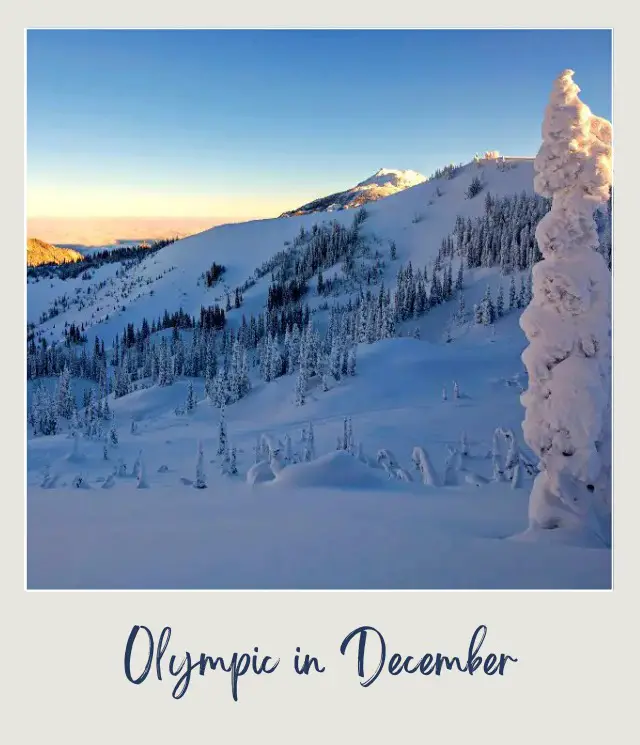
Weather in Olympic National Park in December
There is no single December forecast that applies to the entire park. Elevation and location influence the weather considerably.
Port Angeles and the Northern Peninsula
Port Angeles lies northeast of the Olympic Mountains and receives less precipitation than the park’s western side. During Olympic National Park in December, typical daytime temperatures in Port Angeles range from the low to mid-40s°F, with nighttime temperatures in the mid-30s°F.
Rain is common, and occasional snow or freezing conditions are possible. Port Angeles makes a practical base for visiting Lake Crescent and Hurricane Ridge.
Olympic Rainforests
The Hoh, Quinault, and Queets valleys receive substantial winter rainfall. Daytime temperatures commonly reach the low to mid-40s°F, while nights often fall into the 30s°F.
Snow is less common at these lower elevations, but it can occur. Flooding, fallen trees, standing water, and muddy trails are more likely concerns.
Pacific Coast
Coastal temperatures in Olympic National Park in December are generally moderate, with highs in the upper 40s°F and lows around the upper 30s to low 40s°F. Wind and rain can make it feel much colder.
December storms may produce heavy rain, high surf, and powerful wind gusts. Conditions can change rapidly, so always check both the weather forecast and tide tables.
Hurricane Ridge
Hurricane Ridge sits more than 5,000 feet above sea level and experiences full winter conditions. Temperatures frequently remain below freezing, and heavy snow can fall throughout the month.
Wind chill may make conditions feel considerably colder. Blowing snow can reduce visibility and cover the road soon after it has been plowed.
These figures are general averages rather than a forecast for Olympic National Park in December. Review conditions for each area you intend to visit rather than relying on a forecast for one gateway town.
Does It Snow in Olympic National Park in December?
Yes, particularly in the mountains. Olympic National Park in December typically brings significant snow to Hurricane Ridge, although the exact depth varies from year to year.
Snow can also fall around Lake Crescent, at higher points along Highway 101, and occasionally in the rainforest valleys. Lower elevations are more likely to receive rain, but a cold storm can bring slush, ice, or accumulating snow.
Even when the forest floor is snow-free, roads and bridges may freeze overnight. Shaded sections can remain icy after nearby pavement has thawed.
If you want to see snow, Hurricane Ridge offers the best opportunity when its road is open. Access is weather-dependent and should never be considered guaranteed.
Crowds in December
Olympic National Park in December is one of the quieter times to visit. Trails through the Hoh Rain Forest and along Lake Crescent receive far fewer visitors than during the main travel season.
The Pacific coast can also feel wonderfully uncrowded. You may have long stretches of beach almost entirely to yourself, particularly on rainy weekdays.
The holiday period is busier. Scenic coastal viewpoints, easy rainforest trails, and Hurricane Ridge can attract more visitors when schools are closed.
A clear day following fresh snow may bring substantial traffic to Hurricane Ridge. Because winter access is limited and parking capacity can be reduced, the road may temporarily close once parking areas fill.
Insider Tip
Do not build your entire itinerary around Hurricane Ridge. Make it a weather-dependent option and keep a lower-elevation backup plan ready.
Lake Crescent, Madison Falls, the Elwha Valley, or coastal locations near Port Angeles can provide excellent alternatives when the mountain road is closed.
Road Conditions and Seasonal Closures
Many lower-elevation roads remain open during winter, but temporary closures can happen after flooding, landslides, high winds, fallen trees, or snow.
Check the park’s current conditions and Washington State Department of Transportation road reports before setting out.
Highway 101
US Highway 101 loops around the Olympic Peninsula and connects the park’s major regions. It generally remains open throughout winter, making it an important route for exploring Olympic National Park in December.
Storms can still cause delays and temporary closures. Watch for standing water, branches, debris, and ice—especially during early morning travel.
Services are widely spaced on the western peninsula. Fill your gas tank when you have the opportunity rather than waiting until it is nearly empty.
Hurricane Ridge Road
Hurricane Ridge Road has limited winter operations. Its schedule varies according to weather, staffing, equipment, and annual park operations.
The road is not necessarily open every day. Before opening it, crews must evaluate avalanche hazards, remove snow, and confirm that the route is safe.
Winter visitors should expect:
- Possible delayed openings
- Short operating hours
- Weather-related closures
- Tire-chain requirements
- Limited parking
- Reduced services at Hurricane Ridge
Check the road status shortly before leaving Port Angeles. Conditions at sea level do not indicate what you will find more than 5,000 feet above town.
Deer Park and Obstruction Point
Deer Park Road and Obstruction Point Road are closed to vehicles during winter. These steep, unpaved roads are not practical destinations for an ordinary December day trip.
Sol Duc Road
The road leading into the Sol Duc Valley generally closes seasonally. The closure point and opening schedule can vary based on conditions and park operations during Olympic National Park in December.
Sol Duc Hot Springs Resort is closed for the winter. Do not assume you can drive to the resort or the Sol Duc Falls trailhead in December.
Lake Crescent and roadside destinations along Highway 101 remain more accessible.
Hoh Rain Forest Road
The Hoh Rain Forest Road generally stays open, but heavy rain may cause flooding, fallen trees, or temporary closures. The road is narrow in places, and wildlife may enter the roadway.
The Upper Hoh Road passes through state and private land before reaching the park entrance. Check conditions for the entire route, not just the final section inside the park.
Coastal Roads
Roads to Kalaloch, Mora, and Ozette are generally accessible during winter, making these useful destinations for Olympic National Park in December. However, storms may bring fallen trees, standing water, or localized flooding.
The road to the Quinault area can also be affected by weather and damage. Some routes around the lake are unpaved, narrow, or unsuitable for ordinary passenger vehicles during poor conditions.
Tire Chains and Winter Driving
All vehicles traveling to Hurricane Ridge must carry approved tire chains during the designated winter season. This requirement typically applies even to vehicles with all-wheel drive or four-wheel drive.
Park staff may require you to install chains when traction controls are in effect. Practice putting them on before your trip rather than trying to learn beside a snowy mountain road.
Pack a basic winter driving kit containing:
- Tire chains
- Waterproof gloves
- Ice scraper
- Snow brush
- Flashlight
- Small shovel
- Warm clothing
- Food and water
- Portable phone charger
Drive slowly and allow extra braking distance. Avoid sudden acceleration, hard braking, and abrupt steering on snow or ice.
Rental companies may have restrictions concerning tire chains. Check the agreement before choosing a vehicle, but remember that rental policies do not override park safety requirements.
Things To Do in Olympic National Park in December
Winter closes some areas, but there are still plenty of rewarding places to explore.
Walk Through the Hoh Rain Forest
December is an excellent time to experience the Hoh Rain Forest at its wettest and greenest. Rain deepens the colors of the moss, ferns, and enormous conifer trees.
Short options near the visitor center include:
- Hall of Mosses Trail
- Spruce Nature Trail
- The lower section of the Hoh River Trail
Expect mud, puddles, slick roots, and wet boardwalks. Waterproof footwear makes the experience much more comfortable.
The Hoh Rain Forest Visitor Center may have limited or no regular winter hours. Bring maps and download information before leaving an area with reliable cell service.
Explore the Quinault Rain Forest
The Quinault Valley offers another beautiful rainforest experience in Olympic National Park in December. Short forest trails, waterfalls, and views across Lake Quinault make it a practical stop on the southwestern side of the peninsula.
The Quinault Rain Forest receives heavy winter rain. Creeks can rise rapidly, and trails may have flooded sections or fallen trees.
Lake Quinault Lodge lies outside the national park on the lake’s southern shore and may offer lodging and meals. Confirm current operating hours before relying on any concession or restaurant.
Visit Lake Crescent
Lake Crescent is striking in winter. Clouds drift through the surrounding mountains, and the deep lake often takes on rich blue, gray, and green tones.
December activities may include:
- Walking beside the lake
- Visiting the historic Lake Crescent Lodge area
- Hiking to Marymere Falls
- Exploring the Moments in Time Trail
- Stopping at scenic pullouts along Highway 101
Lake Crescent Lodge is generally closed for the winter, so services are limited. Roads and trails may also be icy after cold weather.
Marymere Falls is a worthwhile winter hike, but the path includes roots, bridges, steps, and potentially slippery surfaces. Turn around if ice makes the final climb unsafe.
See Madison Falls
Madison Falls is one of the easiest waterfall stops in the park. A short, paved path leads from the parking area to the viewpoint.
The trail can still become icy or covered with storm debris. Because it is a lower-elevation destination, Madison Falls makes a useful backup when Hurricane Ridge is inaccessible.
Road access farther into the Elwha Valley is limited. Follow all closure signs and never walk around construction or safety barriers.
Watch Winter Waves at Kalaloch
The Kalaloch coastline is especially dramatic during December. Winter storms produce large waves, sea spray, and fast-moving clouds.
Popular coastal stops include:
- Ruby Beach
- Beach 1
- Beach 2
- Beach 3
- Kalaloch Beach
- Tree of Life
Stay well away from driftwood during high surf. Waves can lift and roll enormous logs with little warning.
Never turn your back on the ocean. Sneaker waves can travel much farther up the beach than expected, even when the water initially appears calm.
Explore Rialto Beach
Rialto Beach is accessible from the Mora area and offers a rugged shoreline covered with driftwood and smooth stones. Sea stacks and offshore islands create excellent photography opportunities.
Walking north toward Hole-in-the-Wall requires careful tide planning. High tides can block headlands and leave hikers trapped between steep terrain and the ocean.
December daylight is limited, so allow more time than you think you will need. If the tides do not align with daylight hours, enjoy the beach near the parking area instead.
Visit the Ozette Area
Lake Ozette and the trails leading toward Cape Alava and Sand Point remain possible winter destinations, but they require more planning.
The coastal loop is approximately nine miles long. Mud, slippery boardwalks, tides, storms, and short daylight hours can turn it into a demanding outing.
December is not the ideal time for an unprepared beginner to attempt the entire loop. A shorter walk near Lake Ozette may be the better choice when conditions are poor.
Play in the Snow at Hurricane Ridge
When the road is open, Hurricane Ridge provides the park’s most accessible winter recreation.
Possible activities include:
- Snowshoeing
- Cross-country skiing
- Sledding in designated areas when permitted
- Winter photography
- Enjoying mountain viewpoints
- Backcountry skiing for properly trained visitors
The former Hurricane Ridge Day Lodge was destroyed by fire, so visitor services and indoor shelter are much more limited than they once were. Temporary facilities may be available, but you should arrive prepared to be self-sufficient.
Bring food, water, warm clothing, and emergency supplies. Do not count on having a heated building available.
Snowshoeing at Hurricane Ridge
Snowshoeing is one of the best ways to experience Olympic National Park in December when snow and road access cooperate.
Winter routes are not maintained like ordinary summer hiking trails. Snow can cover signs, trail junctions, rocks, and drop-offs. Fog and blowing snow may make navigation difficult within minutes.
Beginners should remain in conservative terrain near the developed Hurricane Ridge area. Do not follow existing tracks unless you know where they lead.
More ambitious routes may cross avalanche terrain. Travelers entering the backcountry need navigation skills, avalanche education, appropriate rescue equipment, and the experience to evaluate changing conditions.
Snowshoeing Safety Tip
Set a firm turnaround time before starting. If clouds lower, snow begins falling heavily, or wind covers your tracks, return while you can still navigate confidently.
Carry a paper map and compass in addition to electronic navigation. Cold temperatures drain phone batteries quickly, and cell service is unreliable.
Winter Trail Conditions
Trail conditions depend heavily on elevation and recent weather.
Lower-elevation rainforest trails are often muddy and waterlogged. Boardwalks, roots, rocks, and wooden bridges can be extremely slippery.
Coastal trails add different challenges. Expect:
- Deep mud
- Slippery ladders or ropes
- Storm debris
- High creek crossings
- Tides that block headlands
- Loose rocks and driftwood
In the mountains, established summer trails may disappear beneath deep snow. Snowshoes, traction devices, and winter navigation skills may be necessary.
Check trail reports, but remember that winter information can become outdated after a single storm.
Coastal and Tide Safety
Checking tide tables is essential for any December beach walk. Some headlands, coves, and sections of sand become impassable at high tide.
Use an official tide prediction for the specific part of the coast you are visiting. Tide times can differ between locations.
Give yourself a generous safety margin. Wind, barometric pressure, and winter storms can push water higher than predicted.
Other coastal hazards include:
- Sneaker waves
- Rolling driftwood
- Falling rocks
- Unstable bluffs
- Strong currents
- Cold-water exposure
- Slippery logs and stones
Climb over driftwood only when necessary and never stand on logs near the surf. Keep children close and dogs leashed where pets are allowed.
Wildlife in December
Wildlife remains active throughout the park, although sightings are unpredictable.
Animals you might see include:
- Roosevelt elk
- Black-tailed deer
- River otters
- Coyotes
- Raccoons
- Harbor seals
- Sea lions
- Bald eagles
- Ravens
- Waterfowl
Roosevelt elk may appear in the Hoh and Quinault valleys. Give them plenty of room, particularly if a herd is near a road or trail.
Black bears are generally less active during winter, but they do not follow a fixed calendar. Food storage rules still apply.
Mountain goats were removed from the Olympic Mountains through a multi-year relocation program, so visitors should not expect to encounter them at Hurricane Ridge.
Wildlife Viewing Tips
Use binoculars or a telephoto lens rather than approaching wildlife. Stay at least 25 yards from most animals and 100 yards from bears or other predators.
Pull over only in designated areas. Wet roads, limited visibility, and narrow shoulders make sudden roadside stops particularly dangerous during winter.
Never feed wildlife. Human food changes natural behavior and can put both animals and visitors at risk.
What Is Open in December?
Winter operations in Olympic National Park in December change from year to year. Individual facilities may close because of weather, maintenance, staffing, or storm damage, so check current conditions before your visit.
Areas that are generally accessible include:
- Highway 101
- Lake Crescent
- Madison Falls
- Hoh Rain Forest, road conditions permitting
- Kalaloch
- Ruby Beach
- Rialto Beach
- Mora
- Ozette
- Lake Quinault area
- Hurricane Ridge on scheduled days when conditions allow
Facilities and services with seasonal or limited operations may include:
- Hurricane Ridge access and temporary facilities
- Hoh Rain Forest Visitor Center
- Olympic National Park Visitor Center in Port Angeles
- Ranger stations
- Restrooms
- Campgrounds
- Lodges and restaurants
Seasonally closed destinations generally include:
- Deer Park Road
- Obstruction Point Road
- Sol Duc Hot Springs Resort
- Sol Duc Road beyond its winter closure
- Many park concession services
- Several developed campgrounds
Do not assume food, fuel, water, or equipment rentals will be available inside the park. Stock up in Port Angeles, Forks, Aberdeen, Hoquiam, or another gateway community.
Lodging in and Near Olympic National Park
Winter lodging is limited, but you can still find comfortable bases around the peninsula for Olympic National Park in December.
Port Angeles works well for Hurricane Ridge, Lake Crescent, and the Elwha area. Forks is convenient for the Hoh Rain Forest, Rialto Beach, and the northern coast.
Kalaloch Lodge generally operates throughout the year, although individual services may have limited hours. Lake Quinault Lodge also provides a useful base on the southwestern side of the peninsula.
Seasonal park lodges, including Lake Crescent Lodge and Sol Duc Hot Springs Resort, are generally closed in December.
Confirm restaurant availability before booking remote lodging. Some properties have reduced winter dining hours, and the next open restaurant may be a significant drive away.
Is December a Good Time To Visit Olympic National Park?
December is a good time to visit Olympic National Park in December if you enjoy uncrowded trails, green rainforests, waterfalls, wild coastal weather, and the possibility of mountain snow.
It is less suitable if you want predictable sunshine, extensive high-country hiking, warm camping conditions, or access to every park region.
The best December itinerary stays flexible. Choose one or two neighboring areas each day rather than trying to circle the entire peninsula. Keep an alternative activity ready in case storms or road closures change your plans.
Pros
- Quiet trails and viewpoints
- Lush, green rainforests
- Dramatic winter waves
- Snow recreation at Hurricane Ridge when accessible
- Fewer parking problems at lower elevations
- Excellent waterfall conditions
- Moody and varied photography opportunities
- Better chances of finding peaceful coastal scenery
Cons
- Frequent rain and cloudy weather
- Limited daylight
- Seasonal road and facility closures
- Unreliable Hurricane Ridge access
- Muddy or icy trails
- Coastal storms and dangerous surf
- Limited campground and lodging services
- Long driving distances between park regions
- Possible flooding, fallen trees, and temporary road closures
Final Thoughts
Visiting Olympic National Park in December gives you the chance to experience several versions of winter in one trip. Snow may cover Hurricane Ridge while rain feeds the waterfalls and powerful waves reshape the beaches below.
You will need waterproof clothing, careful tide planning, and a flexible itinerary. Check current conditions each morning, avoid packing too many distant areas into one day, and keep a lower-elevation backup plan ready.
If you are comfortable with rain and changing weather, Olympic National Park in December offers quiet trails, vivid rainforest scenery, wild beaches, and a side of the peninsula that many travelers never see.
Deciding when to go to Olympic National Park is a very important step in planning your trip, and I hope this guide is helping.
However, as I’m sure you’re very aware, this is just one thing of many to decide. Once you’ve decided the timing of your trip, you still need to make an actual plan.
In fact, the thing that most people ask me about is how to put it all together into an itinerary that makes sense. They decide when they’ll go and maybe even book their flights, but still worry about how to minimize the crowds, what to do – and when – and how to coordinate it all.
To help take away the overwhelm of planning a trip to Olympic National Park, I’ve created several super detailed itineraries.
Without them, people often feel stressed about planning their trip. With them, they have the confidence of getting all the info they need in one spot. Plus, there’s flexibility built in, so they can easily adapt them to their own interests and activity levels.
There are 1-, 2-, 3-, and 4- day options for Olympic National Park: all with detailed hour-by-hour schedules, including alternatives for different activity and fitness levels, plus trail maps and descriptions, driving instructions, important information, essential tips, and everything else you need to make the most of your time in Olympic National Park.
Travel Insurance for Olympic National Park
No matter what when you go to Olympic National Park, you should definitely get travel insurance. This can protect you not only against medical and emergency repatriation, but can also cover things like trip cancellation, loss and/ or theft of property, etc.
➡️ A great insurance option is Travelex. It has coverage for all you’ll need. You can compare Travel Insurance plans here or get a quote right now:
Enjoy Olympic National Park!
More Planning Resources for Olympic National Park
⭐ Olympic National Park Guide
⭐ Olympic National Park Itinerary
⭐ 7 Mistakes to Avoid in Olympic
⭐ How Many Days in Olympic National Park?
⭐ Packing List for Olympic National Park
⭐ Best Things to Do in Olympic National Park
⭐ Best Views In Olympic National Park
⭐ Best Waterfalls in Olympic National Park
⭐ Best Hikes in Olympic National Park
⭐ Visiting Hurricane Ridge: Complete Guide
⭐ Best Hurricane Ridge Hikes
🔹 Hurricane Hill Trail Guide
🔹 Cirque Rim Trail Guide
🔹 High Ridge Trail to Sunrise Point Trail Guide
⭐ Best Hikes Near Lake Crescent
🔹 Marymere Falls Trail Guide
⭐ Best Sol Duc Hikes
🔹 Sol Duc Falls Trail Guide
🔹 Ancient Groves Nature Trail Guide
🔹 Sol Duc Salmon Cascades
⭐ Best Hoh Rainforest Hikes
🔹 Hall of Mosses Trail Guide
🔹 The Hoh River Trail Guide
⭐ Best Olympic National Park Beaches
⭐ Best Tide Pools in Olympic National Park
🔹 Rialto Beach Guide
🔹 Kalaloch Beach 4 Guide
🔹 Third Beach Guide
🔹 Second Beach Guide
🔹 The Tree Of Life
⭐ Best Lake Quinault Hikes
🔹 Maple Glade & Kestner Homestead Trails
⭐ Lake Quinault Loop Drive: A Complete Guide
⭐ How To Get to Olympic National Park
⭐ All The Airports Near Olympic National Park
⭐ The Closest Airport to Olympic National Park
⭐ When is The Best Time To Visit Olympic National Park?
⭐ 12 Tips for Visiting Olympic National Park
⭐ 10 Fun Facts About Olympic National Park
What do you think the best month to visit Olympic National Park is ? Join my private Facebook group National Parks Collectors and comment and let me know (you can also pick up extra planning tips, share your photos and stories with other national park lovers and more).
If you’re planning to visit Olympic National Park in December, pin it to your Olympic National Park board!
💡 Are you just starting to think about taking a national parks trip? Get Inspiration
‼️ Are you looking for helpful tips for visiting US national parks? Read articles that share useful tips on a range of national-park related issues
💻 Are you starting to plan a trip to Olympic National Park? Read my Guide to Olympic National Park
📋 Do you want a ready-made super detailed plan for your trip to Olympic? Get a detailed 1 – 4-day Olympic National Park Itinerary
💲 Are you ready to book your trip? Use these Planning and Booking Resources
📖 Do you want to read a book about US national parks? Check out my Recommended Reading Lists
About the Author
James Ian is a national park, camping and hiking expert.
He has dedicated his life to travel, visiting more than 80 countries, all 7 continents and most of the national parks in the United States. With over 35 years experience in the travel industry, James has worked on cruise ships, at resorts and hotels, and as a travel planner who’s helped hundreds of people plan successful trips to US national parks.
Based on his experience visiting our national parks multiple times, in-depth research and expertise as a travel planner, James has published detailed itineraries for many of the major national parks in the US. These itineraries, as well as in-depth park guides, and other resources will help you have your own incredible trip to US national parks without stress and hassle.
As a national park expert, James has contributed to many publications, including USA Today, Newsweek, Time Business News, Savoteur, Best Trip, and Wired.
I’m a member of the Amazon Services LLC Associates Program. As an Amazon Associate I earn from qualifying purchases.