
Think hiking season ends when the snow starts to fall? Think again. Some of the best hikes in U.S. National Parks are even more spectacular in winter.
From snow-covered trails and frozen waterfalls to desert hikes that are far more comfortable without the summer heat, winter opens up a completely different side of the parks.
Drawing on my own national park travels, plus recommendations from fellow travel experts who’ve hiked these trails themselves, I’ve rounded up winter hikes that are genuinely worth planning a trip around.
Whether you’re looking for a snowy adventure or a warmer winter escape, you’ll find options here for both.
Ready to see some of the best national park hikes to take this winter? Let’s hit the trail.
Table of Contents
6. Taggart Lake, Grand Teton National Park
- Location: Wyoming
- Length: 3 miles out and back
- Difficulty: Easy
- Trailhead: Taggart Lake Trailhead
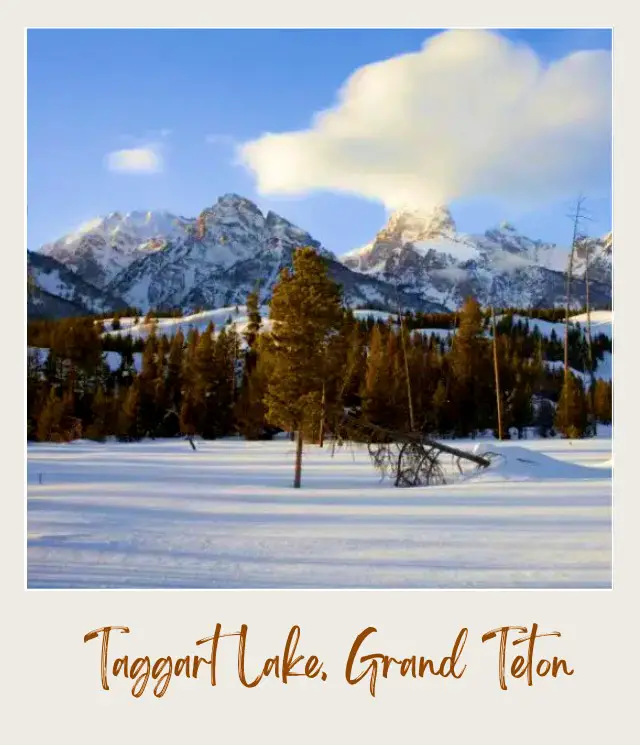
The trail to Taggart Lake is an easy trail that is groomed for snowshoeing and skiing in winter. The first part of the trail from the parking area is flat, wide and easy to follow. After crossing a narrow bridge over Taggart Creek, the trail narrows and follows the creek, ascending slightly, with small ups and downs.
You exit the trees after about a mile and are wowed with unsurpassed views of the snow-covered Teton mountains. You soon arrive at Taggart Lake, which is frozen throughout the winter months.
With the jaw-dropping scenery and snowshoeing fun, you can immediately see why this is one of the best winter hikes Grand Teton offers.
Why Winter?
The trail to Taggart Lake is one of the best winter hikes in Jackson Hole for several reasons. You can drive to the trailhead as it is open year-round. The trail is groomed about three times a week for snowshoeing and cross-country skiing.
The frozen lake is perfectly located with stunning views of the snow-covered Grand Teton range.
Insider Tips:
- The lake is frozen and people walk on it, but don’t hike on it if you are alone, just in case you fall through. The ice should be at least 4 inches thick – if in doubt, stay on the shore.
- You can hike or ski this trail, but it’s an especially fun trail to snowshoe. Check my Guide to the Best Snowshoes for Beginners here.
Highlights:
- Frozen lake
- Stunning mountain views
- Snowshoeing fun
READ MORE: Winter Guide to Grand Teton National Park and Best Things to Do in Grand Teton National Park in Winter
5. Delicate Arch, Arches National Park
- Location: Utah
- Length: 3 miles round trip
- Difficulty: Moderate
- Trailhead: Delicate Arch trailhead/ Wolf Ranch on a road off the scenic drive
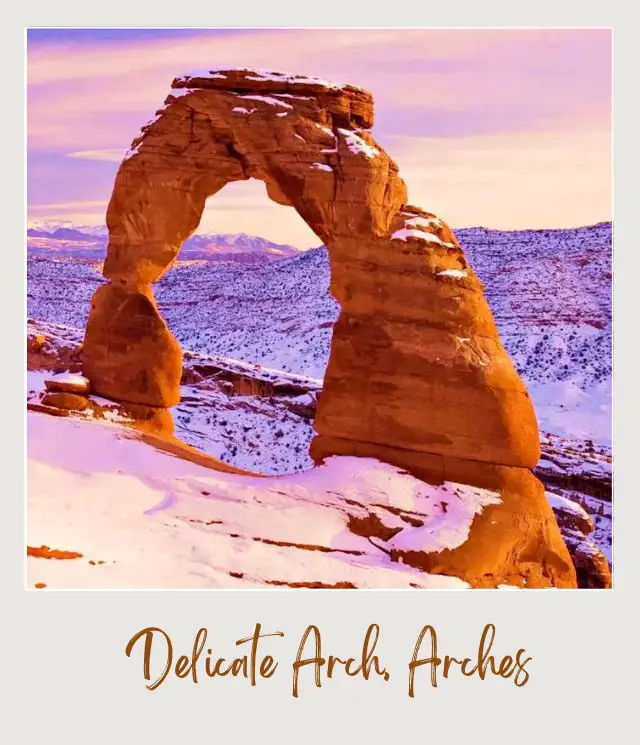
The Delicate Arch trail is one of the most iconic hikes in Utah and my top pick of all the best winter hikes in Arches National Park. The arch is on the state license plate, after all. It’s a must-do on any trip to Arches National Park and it’s worth any effort needed to get there.
There trail starts off with a small set of switchbacks before crossing a massive open slickrock section. This is the worst part since it’s steep and feels like it goes on forever. Once you get to the top of that, there is one more flat section then a small part with a bit of a drop off on the left before rounding the corner to be greeted by the iconic free-standing arch.
Why Winter?
This is a great trail to do in the winter when crowds are smaller (it’s still busy, but much less than summer) and temperatures are dramatically lower than the peak summer months. You may even catch the arch and surrounding rock dusted in snow and the La Sal Mountains in the background buried in it.
Insider Tips:
- The trail is busiest at sunset and the middle of the day so morning is the best time to go if you want to avoid the crowds.
- Consider wearing Microspikes for any icy spots on the trail. (You can buy my favorite Microspikes right here ~ James)
Highlights:
- The historic Wolfe Ranch
- The Wolfe Ranch petroglyphs
- Delicate Arch at the end, of course!
Recommended by Megan Johnson from Red Around the World
READ MORE: Arches National Park Guide and Best Hikes in Arches National Park
4. Panorama Point Trail, Mount Rainier National Park
- Location: Washington
- Length: 5.0 miles
- Difficulty: Moderate
- Trailhead: Panorama Point Trailhead in Paradise
Panorama Point is one of the best trails in Rainier in any season, winter included!
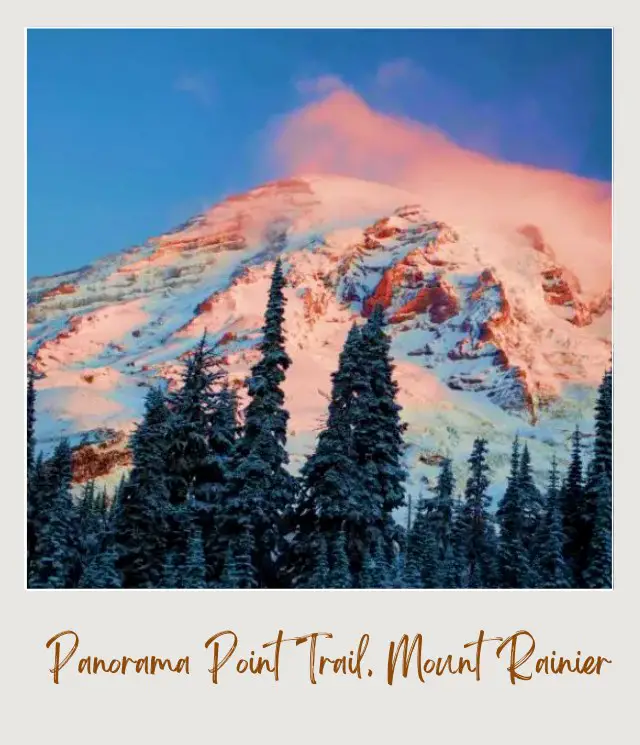
On a clear day, snow-covered Mount Rainier will tower above, and the Cascade Mountains will surround you for jaw-dropping views the majority of the trail.
Why winter? In summer, this trail connects to the much longer Skyline Trail, but in winter, the area becomes a winter wonderland that can make a great snowshoeing adventure when the conditions are right.
Insider Tips:
- When hiking and snowshoeing in winter, make sure to research trail conditions and be aware of avalanche safety. Mount Rainier National Park’s website has webcams of the Paradise and Longmire areas, making it easy to check the weather conditions and visibility.
- Check for road closures and tire chain requirements (required November 1 to May 1) before visiting, as conditions can change quickly in the mountains.
- If the road to Paradise is closed, there are several lower elevation hikes in the Longmire section of the park, right before Paradise. One is Rampart Ridge, a 4.5-mile, moderate hike. This trail will lead you through the trees to some overlooks of the snowy mountains.
Highlights:
- Panoramic views of Mount Rainier
- Snowy covered pines
Recommended by Val Pope from Voyages with Val
READ MORE: Legendary Inns and Lodges in US National Parks
3. Navajo Loop Trail, Bryce Canyon National Park
- Location: Utah
- Length: 1.2 miles out and back
- Difficulty: Moderate
- Trailhead: Sunset Point
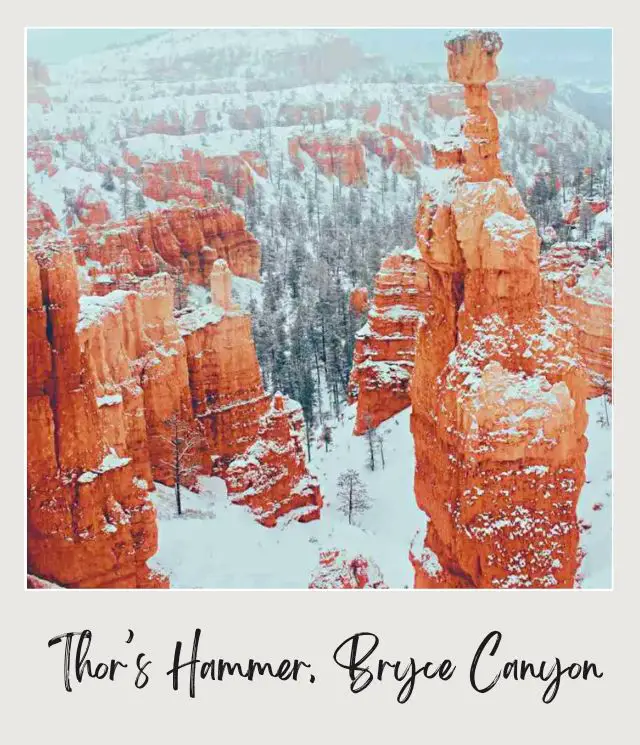
Bryce Canyon National Park in winter is an amazing park to visit because of the unique experience of seeing huge red, limestone hoodoos covered in snow. One of the best winter hikes in Bryce Canyon to experience the snow and hoodoos, is the Navajo Loop Trail.
Navajo Loop Trail begins at a beautiful scenic viewpoint and descends down switchbacks to be among the hoodoos.
In the summer, this trail forms a loop with the Queen’s Garden Trail; however, during most of the winter, part of the loop is closed for safety reasons, making it a down-and-back hike. In the summer this can be a very hot and sweaty hike yet in the winter it feels like you are descending into a magical winter wonderland.
Why Winter?
The orange hoodoos in Bryce Canyon are especially beautiful when covered with and surrounded by snow.
Insider Tips:
- One important thing to note is that the trail will most likely be covered in packed snow. This can make the switchbacks very icy and slippery and almost impossible to hike if you don’t have incredibly good hiking boots. Slip-on traction devices (Microspikes or crampons) are highly recommended by the rangers in order to have a safe hike. (You can buy Kahtoola MIcrospikes right here. These are the ones I use and they’re great! They slip right over your regular hiking boots and take away the danger – and fear – of slipping on ice. ~ James)
Highlights:
- Take in a beautiful view of a huge valley of colorful hoodoos
- Hike past Thor’s Hammer, Bryce Canyon’s tallest hoodoo
- Get up close and personal with the beautiful hoodoos rather than only seeing them from viewpoints
Recommended by Jenessa from Destination Daydreamer
READ MORE: Guide to Bryce Canyon National Park
2. Emerald Lake, Rocky Mountain National Park
- Location: Colorado
- Length: 3.6 miles out-and-back (round-trip)
- Difficulty: Easy to Moderate
- Trailhead: Bear Lake Trailhead
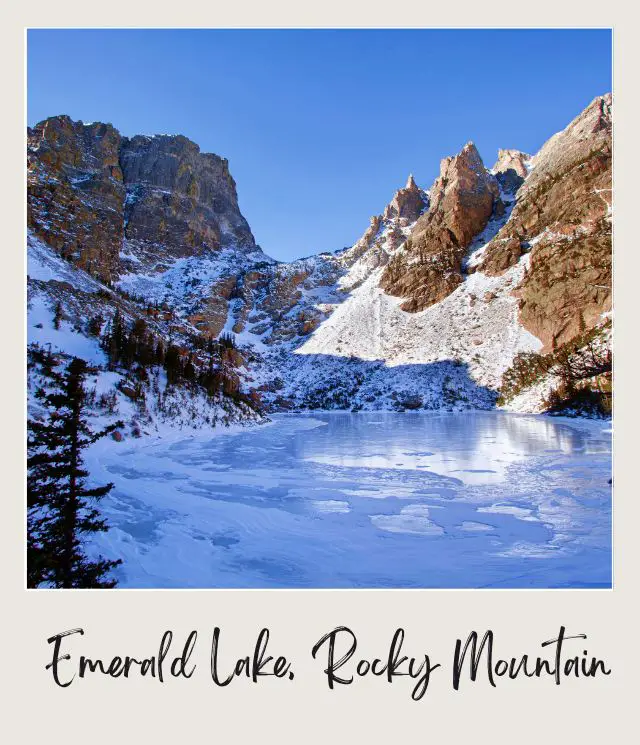
A true gem of a trail – see what I did there? 😉 – the Emerald Lake hike is one of the best winter hikes Rocky Mountain National Park has. It’s one of the most popular hikes in Colorado for all the right reasons. Not only is it a relatively easy hike that is accessible to everyone, but the stunning views of three picture-perfect alpine lakes backdropped by dreamy mountain scenery make it one of the most scenic spots in Rocky Mountains.
Another reason this is one of the best winter hikes in Rocky Mountain National Park is that it’s actually four hikes in one. Aside from the three main lakes along the trail (Nymph Lake, Dream Lake, and Emerald Lake), you can also continue onwards to Lake Hayiaha. This adds two miles (round-trip) into your itinerary, but it’s well worth it if you’re still keen to relish more gorgeous alpine scenery.
Why Winter?
Even though Rocky Mountain National Park is most visited during the summer months, the Emerald Lake hike can be a lovely experience in winter if you come prepared. The frozen lakes create a dreamy, snow-filled landscape that you’ll get to have pretty much all to yourself!
Insider Tips:
- Bring a GPS if hiking during the winter. There are a lot of adventures branching from these trails (backcountry skiing, mountaineering, etc.). Social trails are common in winter, so be sure to check your location while you hike.
- To do this hike and any of the other best winter hikes in Estes Park area of the Rockies, you should either wear Microspikes/ crampons or snowshoes. (Buy my favorite Microspikes here or check out my top pick for snowshoes for beginners here ~ James)
Highlights:
- Beautiful frozen lakes covered in snow
- Snowy mountain scenery
Recommended by Dani Ramos from Fox in The Forest
READ MORE: Guide to Rocky Mountain National Park
1. Black Sand Basin Trail, Yellowstone National Park
- Location: Wyoming
- Length: 4-mile round-trip
- Difficulty: Easy
- Trailhead: Old Faithful Visitor Center
Winter in Yellowstone National Park is truly a wonderland. Due to deep snow, winter hiking or snowshoeing is one of the best winter activities.
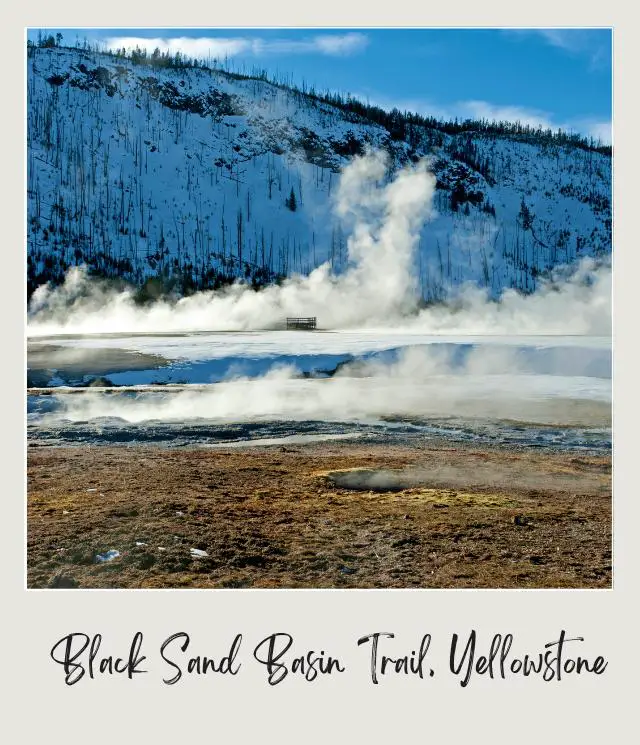
The Black Sand Basin Trail is a beautiful hike in the Old Faithful area in the park’s interior. It offers spectacular views of geysers exploding from under the fresh snow.
The trail starts in front of the Old Faithful Visitor Center and takes the Upper Geyser Basin Trail past Castle Geyser. The well-marked trail is an easy 4 miles (6.4 km) round trip hike, which takes you from the Upper Geyser Basin to Black Sand Basin.
In addition to geysers, it is possible to spot bison looking for grass under the snow. It’s one of the most scenic winter hikes on the ski and snowshoe trail in the Old Faithful area.
Due to the heavy snowfall in Yellowstone during winter, this trail can be a little tiring and can take approximately 3 hours. Which is why the best option is to go on cross-country skis or snowshoes. The trail is prepared for both and is good for all skill levels.
Why Winter?
The whole area is especially beautiful when the ground is covered in snow. Seeing the brightly-colored hot springs surrounded by white snow, with geysers erupting and bison foraging for food, all while snowshoeing, snow hiking or skiing, is a magical experience.
Insider Tips:
- Winter in Yellowstone is freezing, so dress in layers. Be sure to wear thermal underwear with long sleeves, a warm jacket, a hat, and gloves. Hand warmers and foot warmers are a great idea.
- Take high-energy snacks because when you’re hiking in snow, your body needs much more energy.
- The Old Faithful area is only accessible by snowmobile or snowcoach in winter. The road is closed to regular vehicles, so book your winter transportation in advance.
Highlights:
- Geysers, including Old Faithful
- Brightly colored hot springs
- Bison
Recommended by Agnes from The Van Escape
READ MORE: Yellowstone National Park Guide
Winter Hiking Gear You’ll Need
Let’s take a quick look at some winter hiking gear. The most important thing when hiking in winter weather is to be prepared and have the right equipment.
Be sure to check my Winter Hiking Gear Essentials to make sure you have everything you need.
Some of these trails can be done hiking or alternatively, by snowshoeing.
Hiking
If you choose to hike, you will want to make sure you have good winter hiking boots and Microspikes or crampons. If you are looking for hiking boots, be sure to read my Guide to the Best Hiking Shoes/ Boots. You can find the Best Winter Hiking Boots for Men (Reviews and Recommendations) and the Best Winter Hiking Boots for Women (Reviews and Recommendations).
Microspikes or crampons are sharp spikes that you put over the bottom of your hiking boots. They grip into the ice or packed snow and give you the traction you need to safely walk on otherwise slippery surfaces.
I used to hate winter hiking because I was always afraid of slipping over. As soon as I bought some Microspikes, that changed completely. Now I love hiking in winter – and feel safe doing so.
Read my Guide to the Best Hiking Microspikes.
Buy my favorite Microspikes (the Kahtoola MICROspikes) here
Snowshoeing
Some of these hikes can be done on snowshoes. This is a fun winter alternative to hiking. Read my Guide to the Best Snowshoes for Beginners for tips on what to look for and reviews and recommendations. Or check out my top pick, the TSL Symbioz Access snowshoes.
My other recommendation when hiking is to always take binoculars. You never know when you’ll spot some winter wildlife in the distance. I think they’re so important that I wrote a Guide to Finding the Best Binoculars For the Money. Be sure to check it out.
Read more winter gear reviews here
Happy hiking!
What are your favorite winter park hikes? I’d love to hear about them. Join my private Facebook group National Parks Collectors and comment and let me know.
If you liked this post, please share the love and Pin it to your US National Parks and Hikes boards!
Are you just starting to think about taking a national parks trip? Get Inspiration
Are you starting to plan a trip to a national park? Read my National Parks Guides
Do you want an itinerary to help plan your trip? Check out my Detailed Itineraries
Are you ready to book your trip? Use these Planning and Booking Resources
About the Author
James Ian is a national park, camping and hiking expert.
He has dedicated his life to travel, visiting more than 80 countries, all 7 continents and most of the national parks in the United States. With over 35 years experience in the travel industry, James has worked on cruise ships, at resorts and hotels, and as a travel planner who’s helped hundreds of people plan successful trips to US national parks.
Based on his experience visiting our national parks multiple times, in-depth research and expertise as a travel planner, James has published detailed itineraries for many of the major national parks in the US. These itineraries, as well as in-depth park guides, and other resources will help you have your own incredible trip to US national parks without stress and hassle.
As a national park expert, James has contributed to many publications, including USA Today, Newsweek, Time Business News, Savoteur, Best Trip, and Wired.
I’m a member of the Amazon Services LLC Associates Program. As an Amazon Associate I earn from qualifying purchases.