

December brings a quieter side of Acadia National Park. Snow may cover the carriage roads, ice forms along granite cliffs, and the low winter sun casts beautiful light across Mount Desert Island’s rugged coastline.
It is also a month that requires flexibility. Most visitor facilities have closed, sections of Park Loop Road are inaccessible to vehicles, daylight is limited, and coastal storms can change conditions quickly.
Even with those limitations, Acadia National Park in December can be incredibly rewarding. You can walk beside the Atlantic, photograph snow-covered mountains, explore peaceful carriage roads, and enjoy popular locations with very few other visitors.
This guide covers December weather, road closures, winter activities, trail conditions, wildlife, photography, packing, and everything else you need to plan your visit.
‼️ If you just want a quick snapshot about my thoughts on the best time to visit Acadia National Park, check out my Best Time to Go To Acadia National Park guide. ‼️
🛏️TOP HOTEL PICK: Check availability now
🚘FIND THE CHEAPEST CAR RENTAL: Search Discover Cars for the best deals
✈️FIND THE CHEAPEST FLIGHTS: Search Skyscanner for the best deals
🧳GET TRAVEL INSURANCE: Get insured with Travelex before you go
📱TAKE AN AUDIO TOUR: Buy an audio tour now
Table of Contents
Visiting Acadia National Park in December
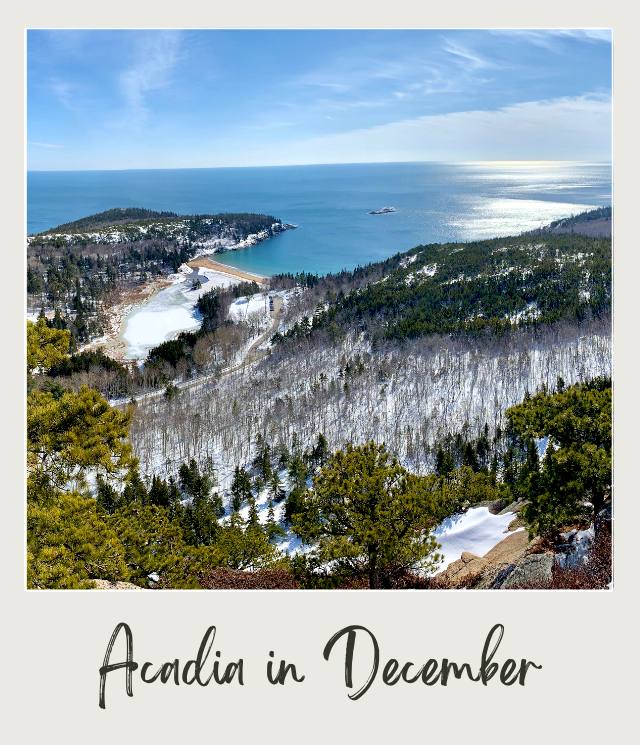
December marks the beginning of winter on Mount Desert Island. Temperatures regularly fall below freezing, but conditions vary throughout the month. During a visit to Acadia National Park in December, you could experience bare ground and cold rain one day, followed by several inches of snow and ice the next.
The park remains open, although access is much more limited than during the main visitor season. Cadillac Summit Road closes to vehicles, most of Park Loop Road shuts down for winter, and campgrounds, visitor centers, restaurants, and concession services inside the park are closed.
You can still reach several beautiful coastal areas. Sand Beach, Ocean Path, Thunder Hole, and Otter Point are generally accessible from the section of Ocean Drive that remains open, subject to temporary weather-related closures.
Winter visitors should be comfortable exploring independently. Bring everything you need for the day, download maps in advance, and check current conditions before leaving your accommodation.
Weather in Acadia National Park in December
December weather around Acadia National Park in December is cold, damp, and unpredictable. Conditions can differ between the coast, wooded valleys, and exposed mountain summits.
Typical temperatures near Bar Harbor are approximately:
- Average highs: 34–39°F (1–4°C)
- Average lows: 20–26°F (-7 to -3°C)
These figures are only general averages. Mild periods can bring rain and temperatures above freezing, while strong cold fronts may produce single-digit temperatures and dangerously low wind chills.
Snow is possible throughout the month, but consistent snow coverage is not guaranteed. Mount Desert Island’s coastal location means storms can bring snow, sleet, freezing rain, ordinary rain, or a mixture of all four.
Wind is often the most challenging part of December weather. Exposed places such as Cadillac Mountain, Otter Point, Schoodic Peninsula, and the Ocean Path can feel considerably colder than sheltered forest trails.
Check the National Weather Service forecast for Bar Harbor and the park’s alerts before setting out. Conditions may change faster than expected during a coastal storm.
Does it snow at Acadia National Park in December?
Yes, snow is common in Acadia National Park in December, although the amount and duration of coverage vary considerably.
A storm may leave deep snow in the mountains while rain falls near sea level. Snow at lower elevations can also melt during a warm period and refreeze overnight, leaving roads and trails covered in ice.
Traction devices are often more useful than snowshoes early in winter. After a substantial storm, however, snowshoes or cross-country skis may be necessary on carriage roads and unplowed trails.
Do not assume that a trail is easy because little snow is visible at its entrance. Shaded sections, exposed ledges, and higher elevations may have very different conditions.
Crowds and Visitation in December
December is one of the quietest times to visit Acadia National Park in December. Parking is usually easy to find, trails are peaceful, and even well-known coastal locations may have only a handful of visitors.
Weekends, holidays, and clear days following fresh snowfall can be busier. Sand Beach, Thunder Hole, and Jordan Pond are especially appealing when the roads are manageable and the mountains are visible.
Smaller crowds create a wonderfully peaceful atmosphere, but they also mean fewer people will be nearby if something goes wrong. Cell service is unreliable in parts of the park, and ranger patrols are less visible than they are during the main season.
Tell someone where you are going before beginning a winter hike. Include your route, parking location, expected return time, and instructions for what to do if you fail to check in.
Do you need a Cadillac Mountain vehicle reservation in December?
No. Cadillac Summit Road is closed to vehicles in December, so vehicle reservations are not offered or required when visiting Acadia National Park in December.
The seasonal reservation system does not apply to other sections of the park. However, visitors must still have a valid park entrance pass when the entrance fee applies.
Although you cannot drive to the summit, experienced and properly equipped hikers may reach Cadillac Mountain on foot. Winter conditions can make summit routes icy, difficult to follow, and much more demanding than they appear during warmer months.
What Is Open in December?
Acadia National Park remains open throughout December, but nearly all seasonal facilities and services are unavailable.
Depending on current road and weather conditions, visitors can generally access:
- The open winter section of Ocean Drive
- Sand Beach
- Ocean Path
- Thunder Hole
- Otter Cliff and Otter Point
- Selected trailheads reached from public roads
- Jordan Pond from available winter access points
- Carriage roads for walking, snowshoeing, or skiing
- Schoodic Peninsula roads, unless temporarily closed
- Public roads through Mount Desert Island communities
Most or all of the following are closed:
- Hulls Cove Visitor Center
- Cadillac Summit Road
- Most of Park Loop Road
- Park campgrounds
- Jordan Pond House
- Wildwood Stables
- Island Explorer buses
- Seasonal gift shops and food concessions
- Regular ranger programs
Restroom availability is limited. A small number of year-round or portable toilets may be available, but locations and maintenance schedules can change.
Bring food, water, and emergency supplies with you. Bar Harbor, Ellsworth, and other year-round communities offer services, although individual businesses may operate reduced winter hours.
Park Loop Road and Seasonal Closures
Most of Park Loop Road closes to motor vehicles on December 1 and remains closed through winter. This closure significantly limits vehicle access to Acadia National Park in December and includes Cadillac Summit Road and many interior portions of the loop.
A section of Ocean Drive generally stays open, providing winter access to Sand Beach and the coastline toward Otter Point. Drivers normally reach this area using Schooner Head Road rather than following the standard summer route through the entire loop.
Exact closure points can change because of snow, ice, flooding, fallen trees, or maintenance. Never drive around a gate, even when the pavement beyond it appears clear.
Other park roads and access points may remain open but receive limited winter maintenance. Conditions on Mount Desert Island can vary significantly, particularly after freezing rain or a coastal storm.
Winter driving hazards
Be prepared for:
- Black ice
- Packed snow
- Freezing rain
- Snow drifting across exposed roads
- Fallen branches
- Reduced visibility
- Flooding during coastal storms
- Snowplows and maintenance equipment
- Deer near roads at dawn and dusk
Winter tires are strongly recommended. Four-wheel drive can help with acceleration, but it does not shorten stopping distances on ice.
Keep blankets, food, water, a flashlight, a shovel, an ice scraper, and traction material in your vehicle. Fill your gas tank before entering more remote areas.
Best Things to Do in Acadia National Park in December
Walk the Ocean Path
Ocean Path is one of the most practical winter walks in Acadia National Park in December. It follows the coastline from Sand Beach toward Otter Point, passing Thunder Hole, Monument Cove, and Otter Cliff.
You do not need to complete the entire route. A shorter out-and-back walk allows you to enjoy the scenery without committing to several miles in changing weather.
Ice frequently develops on stone steps, boardwalks, and shaded sections. Wear microspikes when needed and stay back from the edges, particularly during strong winds or rough seas.
Visit Sand Beach
Sand Beach feels completely different without summer crowds. Snow may reach the edge of the sand, while winter waves create dramatic views between Great Head and the surrounding cliffs.
The beach is beautiful, but it can be windy and much colder than the parking area. Dress in wind-resistant layers and avoid getting too close to the water during rough conditions.
Never turn your back on the ocean. Large waves can travel farther up the beach than expected.
Watch the Waves at Thunder Hole
Thunder Hole in Acadia National Park in December may produce its characteristic sound when the tide, swell, and wind align. It does not perform on a fixed schedule, so dramatic activity is never guaranteed.
Winter storms can create powerful waves here. View the inlet only from designated areas and obey any barriers or closure signs.
Ice from sea spray may cover the viewing platform, railings, and nearby steps. If the surface looks unsafe, enjoy the coastline from a more protected location.
Explore Otter Point
Otter Point offers broad ocean views and easy access from the open section of Ocean Drive. It is a good option for photography, a short coastal walk, or a winter picnic inside your vehicle.
The exposed granite becomes slippery when covered with frost, snow, or sea spray. Stay well away from cliff edges and breaking waves.
Walk the Carriage Roads
The carriage roads are one of the best places for scenic winter recreation in Acadia National Park in December. They extend for miles through forests, around lakes, and beneath historic granite bridges.
Depending on snow and ice, you can explore them on foot, with traction devices, on snowshoes, or on cross-country skis. Access points near Eagle Lake, Jordan Pond, and Brown Mountain are among the most convenient when their parking areas are available.
Conditions are not uniform. One section may be bare gravel while another is covered in deep snow or hard ice.
Go Cross-Country Skiing
After sufficient snowfall, the carriage roads become some of Acadia’s best cross-country skiing routes. Their broad surfaces and vehicle-free setting make them appealing to a range of ability levels.
The park does not guarantee regular grooming, and coverage may be thin in December. Exposed gravel, ice, fallen branches, and changing snow depths can complicate skiing.
Check recent conditions before bringing skis. If skiers have established tracks, walkers and snowshoers should avoid stepping on them.
Try Snowshoeing
Snowshoeing in Acadia National Park in December is possible after a substantial storm, particularly on carriage roads and lower-elevation routes. It can be a good way to explore the park when unbroken snow makes ordinary walking difficult.
December does not always provide enough snow for snowshoes. Carry microspikes as an alternative, since packed ice may be the more significant challenge.
Stay on recognizable routes. Snow can obscure intersections, trail markers, drainage ditches, and the edges of carriage roads.
Visit Jordan Pond
Jordan Pond is a beautiful winter destination when road and parking conditions permit access. The Bubbles rise above the northern end of the pond, and snow can create striking reflections when the water remains open.
Jordan Pond House is closed, and there are no food or beverage services. Bring everything you need and do not expect the same parking access available during the main season.
The full Jordan Pond Path includes rocks, roots, narrow sections, and wooden surfaces that can become extremely icy. A short shoreline visit may be a safer choice when conditions are uncertain.
Explore Schoodic Peninsula
Schoodic Peninsula is the only section of Acadia National Park in December located on the mainland. It offers rugged coastal scenery, granite headlands, spruce forests, and views across Frenchman Bay toward Mount Desert Island.
Winter access can change during storms, but the peninsula is worth considering when roads are clear. Schoodic Point is particularly dramatic during rough weather—view it from a safe distance.
Services are extremely limited in winter. Fill your gas tank, carry food and water, and check conditions before making the drive.
Hiking in Acadia National Park in December
Many trails remain technically open in Acadia National Park in December, but winter changes their difficulty. Snow and ice can turn a moderate hike into a challenging outing requiring traction, navigation skills, and cold-weather equipment.
Granite surfaces are especially hazardous when covered by a thin, nearly invisible layer of ice. Wooden bridges and log steps also become slippery after overnight freezing.
Lower-elevation forest and carriage-road routes are generally the most sensible options for inexperienced winter hikers. Exposed ridges and steep iron-rung trails should be approached much more cautiously.
Before leaving the trailhead:
- Check the weather and park alerts
- Confirm that the access road is open
- Carry a paper map or downloaded offline map
- Pack a headlamp and spare batteries
- Bring microspikes or other appropriate traction
- Wear waterproof boots
- Carry extra food and insulating layers
- Set a firm turnaround time
- Tell someone your route
Do not rely entirely on footprints. Previous hikers may have wandered off the official trail or traveled before conditions deteriorated.
Easier winter walks
Depending on access and trail conditions, reasonable choices may include:
- Ocean Path
- Wonderland Trail
- Ship Harbor Trail
- Compass Harbor Trail
- Jesup Path
- Carriage roads near Eagle Lake
- Short sections of Jordan Pond Path
- Lower-elevation Schoodic Peninsula trails
“Easier” does not mean free of winter hazards. Ice, wet roots, coastal wind, and early darkness can affect every route.
Mountain hikes
Cadillac Mountain, Dorr Mountain, Champlain Mountain, Pemetic Mountain, and the Bubbles remain accessible on foot, but winter ascents require careful planning.
Summit trails may be covered in snow and hard ice. Strong winds, cloud cover, and poor visibility can make navigation difficult above the tree line.
Carry appropriate traction and turn around if conditions exceed your experience. A summit is optional; returning safely is not.
Iron-rung trails
Routes such as Precipice and Beehive include steep ledges, exposed drop-offs, iron rungs, and narrow traverses. Snow and ice make these features significantly more dangerous in Acadia National Park in December.
These are not good choices for most December visitors. There are many lower-risk ways to experience Acadia’s winter scenery without entering steep, exposed terrain.
Wildlife in December
Wildlife remains present throughout the park, but sightings can be less predictable during winter.
You may encounter:
- White-tailed deer
- Red foxes
- Coyotes
- Red squirrels
- Snowshoe hares
- Porcupines
- Ravens
- Bald eagles
- Ducks and other seabirds
- Harbor seals offshore
Black bears are generally denned by December, although wildlife does not follow an exact calendar. Moose are uncommon on Mount Desert Island and should not be expected.
Winter birding can be rewarding along the coast. Scan protected coves and offshore waters for sea ducks, loons, grebes, and other cold-season species.
Wildlife viewing tips
Animals must conserve energy during winter. Avoid approaching, following, or surrounding them for a photograph.
Use binoculars or a telephoto lens and remain on established routes. If an animal changes direction, stops feeding, or becomes focused on you, move farther away.
Drive carefully at dawn and dusk. Deer may step into roads with little warning, especially near wooded sections and residential areas.
Never feed wildlife. Human food can damage an animal’s health and encourage dangerous roadside behavior.
Camping in December
Acadia’s developed campgrounds are closed in December. This includes Blackwoods, Seawall, Schoodic Woods, and Duck Harbor campgrounds.
Backcountry camping is not permitted because Acadia has no designated backcountry campsites. Sleeping in parking areas, at trailheads, or along Park Loop Road is also prohibited.
Travelers need to stay outside the park. Year-round accommodations may be available in Bar Harbor, Ellsworth, Trenton, Southwest Harbor, and other nearby communities.
Many hotels, inns, and vacation rentals close or reduce their availability during winter. Reserve accommodations in advance, particularly if you are visiting over a holiday weekend.
If you want to camp, research privately operated campgrounds outside the park and confirm that they explicitly allow winter stays. Do not assume a campground remains accessible simply because it appears on a map.
Visitor Centers and Ranger Programs
Acadia’s primary visitor centers are closed in December. Hulls Cove Visitor Center does not maintain its regular seasonal operations, and you should not expect exhibits, staffed information desks, or a park store.
Regular ranger-led walks, talks, boat tours, and evening programs are generally unavailable. Special winter events may occasionally be scheduled, but they should not be treated as a guaranteed part of your trip.
Check the park’s official calendar before visiting. Park alerts, road updates, and recorded information can help you plan even when facilities are closed.
For local assistance, year-round visitor information may be available in Bar Harbor or nearby communities. Hours can be limited, especially around holidays.
Is December a Good Time to Visit Acadia National Park?
December is a good time to visit if you enjoy solitude, winter photography, quiet coastal walks, and flexible itineraries. The lack of crowds allows you to experience some of Acadia’s best-known landscapes in a peaceful setting.
It is not the best month if you want to drive the complete Park Loop Road, reach Cadillac Mountain by car, camp inside the park, use the Island Explorer, or participate in a full schedule of ranger programs.
Pros
- Very few visitors
- Peaceful trails and viewpoints
- Beautiful winter photography
- Possible snowshoeing and cross-country skiing
- Easy parking at many accessible locations
- Dramatic coastal weather
- No Cadillac vehicle reservation needed
- Convenient access to services in Bar Harbor
Cons
- Most of Park Loop Road is closed
- Cadillac Summit Road is closed to vehicles
- All park campgrounds are closed
- Visitor centers and concessions are unavailable
- Snow coverage is unpredictable
- Ice can make trails dangerous
- Daylight hours are short
- Coastal storms may disrupt plans
- Restroom availability is limited
Final Thoughts
Visiting Acadia National Park in December offers a peaceful way to experience Maine’s mountains, forests, and rocky Atlantic coast. Snow, frost, winter waves, and soft seasonal light can transform familiar locations into entirely different landscapes.
A December trip requires realistic expectations. Roads and facilities are closed, trail conditions can be difficult, and weather may change your plans with little warning.
Check conditions daily, carry appropriate winter equipment, and choose conservative routes. With preparation and a flexible itinerary, December can be a beautiful time to discover Acadia’s quieter side.
Deciding when to go to Acadia for is a very important step in planning your trip to Acadia, and I hope this guide is helping.
However, as I’m sure you’re very aware, this is just one thing of many to decide. Once you’ve decided the timing of your trip, you still need to make an actual plan.
In fact, the thing that most people ask me about is how to put it all together into an itinerary that makes sense. They decide when they’ll go and maybe even book their flights, but still worry about how to minimize the crowds, what to do – and when – and how to coordinate it all.
To help take away the overwhelm of planning a trip to Acadia, I’ve created several super detailed itineraries.
Without them, people often feel stressed about planning their trip. With them, they have the confidence of getting all the info they need in one spot. Plus, there’s flexibility built in, so they can easily adapt them to their own interests and activity levels.
There are 1-, 2-, 3-, and 4-day options: all with detailed hour-by-hour schedules, including alternatives for different activity and fitness levels, plus trail maps and descriptions, driving instructions, important information, essential tips, and everything else you need to make the most of your time in Acadia National Park.
Travel Insurance for Acadia National Park
No matter when is the best time to see Acadia National Park, you should definitely get travel insurance. This can protect you not only against medical and emergency repatriation, but can also cover things like trip cancellation, loss and/ or theft of property, etc.
A great insurance option is Travelex. It has coverage for all you’ll need. You can compare Travel Insurance plans here or get a quote right now:
Enjoy Acadia National Park whenever you go!
Additional Planning Resources for Acadia National Park
⭐ How to Plan A Trip To Acadia National Park
⭐ The Best Things to Do in Acadia National Park
⭐ 10 Best Hikes in Acadia National Park
⭐ Guide to the Acadia Cadillac Mountain Reservation System
⭐ Planning a Trip to Acadia National Park: 7 Mistakes to Avoid
⭐ Tips For Visiting Acadia National Park
⭐ How Many Days in Acadia National Park?
⭐ The Bass Harbor Head Lighthouse: Complete Guide
⭐ The Best Time to Visit Acadia National Park
⭐ How to Get To Acadia National Park
⭐ The Airport Nearest Acadia National Park
⭐ The Best Airports Near Acadia National Park
⭐ 12 Fun Facts About Acadia National Park
⭐ Best Books About Acadia National Park
⭐ Comprehensive Guide to Acadia National Park Camping
⭐ The Best Airbnb Acadia National Park
What do you think is the best month to visit Acadia National Park? Join my private Facebook group National Parks Collectors and comment and let me know (you can also pick up extra planning tips, share your photos and stories with other national park lovers and more).
If you’re planning to visit Acadia National Park in December, pin this guide to your Acadia National Park board!
💡 Are you just starting to think about taking a national parks trip? Get Inspiration
‼️ Are you looking for helpful tips for visiting US national parks? Read articles that share useful tips on a range of national-park related issues
💻 Are you starting to plan a trip to Acadia National Park? Read my Guide to Acadia National Park
📋 Do you want a ready-made super detailed plan for your trip to Acadia? Get a detailed 1 – 4-day Acadia National Park Itinerary
🛏️ Are you looking for a place to stay near Acadia National Park? Find a vacation rental near Acadia National Park or Find a place to stay in Bar Harbor
💲 Are you ready to book your trip? Use these Planning and Booking Resources
📖 Do you want to read a book about Acadia National Park? Check out my Recommended Reading List for Acadia National Park
About the Author

James Ian is a national park, camping and hiking expert.
He has dedicated his life to travel, visiting more than 80 countries, all 7 continents and most of the national parks in the United States. With over 35 years experience in the travel industry, James has worked on cruise ships, at resorts and hotels, and as a travel planner who’s helped hundreds of people plan successful trips to US national parks.
Based on his experience visiting our national parks multiple times, in-depth research and expertise as a travel planner, James has published detailed itineraries for many of the major national parks in the US. These itineraries, as well as in-depth park guides, and other resources will help you have your own incredible trip to US national parks without stress and hassle.
As a national park expert, James has contributed to many publications, including USA Today, Newsweek, Time Business News, Savoteur, Best Trip, and Wired.
I’m a member of the Amazon Services LLC Associates Program. As an Amazon Associate I earn from qualifying purchases.