
September marks a pivotal transition in Yellowstone National Park’s annual cycle. Summer’s peak heat and heaviest crowds have retreated, yet the park remains fully operational with comprehensive access to all major attractions. The landscape undergoes subtle but significant changes—thermal features continue their relentless displays, wildlife becomes more active as temperatures cool, and the first hints of autumn color begin appearing in higher elevations. If you’re considering a visit to Yellowstone in September, you’re choosing a season that delivers exceptional experiences with notably fewer visitors than the peak July-August period.
Yellowstone National Park in September offers an often-overlooked sweet spot in the park’s seasonal calendar. While spring brings unpredictable weather and lingering snow, and summer attracts massive crowds, September provides stable weather conditions, complete park accessibility, and the beginning of seasonal transitions that create visual richness unavailable in other months. The combination of reduced visitation pressure, reliable road and trail conditions, and distinctive wildlife patterns makes September an ideal choice for visitors seeking to experience Yellowstone’s authentic character without overwhelming congestion.
This comprehensive guide walks through what visiting Yellowstone National Park in September truly entails, including detailed seasonal weather information, facility availability, wildlife viewing opportunities, accommodation options, and strategic planning recommendations to maximize your experience during this rewarding month.
‼️ If you just want a quick snapshot about my thoughts on the best time to visit Yellowstone National Park, check out my Best Time to Go To Yellowstone National Park guide. ‼️
If you’re planning to visit Yellowstone National Park in spring, summer or fall, make your planning easy and stress free with a detailed itinerary. I have 1-, 2-, 3- and 4-day itineraries for Yellowstone National Park that include all the park highlights, give you choices based on your preferred activity level, and take all the stress out of planning your trip.
Table of Contents
Visiting Yellowstone in September
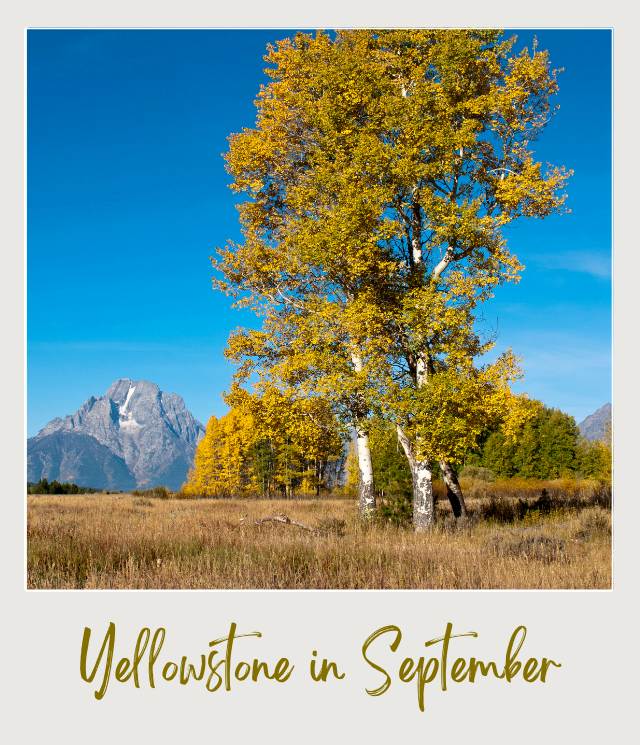
Is September a good time to visit Yellowstone? Yes, Yellowstone National Park in September is wonderful.
The weather in fall is typically mild; however, it can be unpredictable, which can lead to temporary road closures. When I visited in early-mid September, one day it was sunny and I was in a T-shirt. The next day it snowed and the road over the Dunraven Pass between the Canyon section and Tower Falls was temporarily closed overnight (not good when we were at the Canyon and our campground was at Tower Falls and the Norris-Mammoth Hot Springs road was also closed!).
Fall also sees the trees and grasses turn beautiful golden colors. The best time for fall foliage in Yellowstone is typically the last week of September and the first week of October.
September is the best time to visit Yellowstone in the fall.
What’s the Weather Really Like in Yellowstone in September?
September weather at Yellowstone reflects the park’s high elevation and continental climate—conditions are considerably more stable and predictable than spring months, yet noticeably cooler than peak summer.
Daytime temperatures: Typically range from the low 60s to mid-70s°F, with variation depending on elevation and specific location within the park. Lower elevation areas like Mammoth Hot Springs and Norris frequently reach the low 70s, while higher elevation zones around Old Faithful and the central plateau average 10-15 degrees cooler.
Nighttime lows: Often drop into the 30s and low 40s°F, particularly early in the month and at higher elevations. Unlike June when frost occurs throughout September, September nights are cool but rarely freezing in lower elevation areas. However, high-elevation passes and mountain zones can experience frost even in mid-September.
Precipitation patterns: September is notably drier than spring months, yet not completely dry. Afternoon thunderstorms occasionally develop, particularly in early September when residual summer moisture persists. These storms typically pass quickly and rarely disrupt full-day activities. By late September, the park transitions toward fall’s drier patterns.
Daylight hours: Sunset occurs around 7:15 PM early in the month, declining to approximately 6:30 PM by month’s end. This represents a significant reduction from summer’s extended daylight, requiring strategic planning for sunset viewing and evening activities. Sunrise occurs around 6:30 AM early month, shifting to 7:00 AM by September’s conclusion.
Weather stability: September offers substantially more predictable conditions than spring. While weather can shift quickly at high elevation, the overall pattern remains more stable than the dramatic swings common in April and May. This stability makes Yellowstone trip planning in September more straightforward—you can confidently schedule activities without expecting major weather disruptions.
💡 Tip: Layer strategically for September conditions. Mornings feel genuinely cool, afternoons warm comfortably, and evenings require insulation. A lightweight fleece jacket and wind-resistant outer shell accommodate the temperature range without excessive bulk.
Which Park Areas and Roads Are Open in September?
By September, Yellowstone approaches peak accessibility. Nearly all park roads and attractions operate at full capacity, though a few seasonal closures occasionally affect specific high-elevation routes late in the month.
Grand Loop Road Status: The entire Grand Loop Road remains fully operational throughout September. This figure-eight highway connecting Mammoth Hot Springs, Norris, Canyon Village, Lake Village, and Old Faithful provides comprehensive access to the park’s most famous attractions without seasonal disruptions.
Major Attractions Accessibility:
✔️ Old Faithful and Upper Geyser Basin: Fully accessible with all facilities operating at standard capacity
✔️ Mammoth Hot Springs: Complete access including the travertine terrace boardwalks
✔️ Grand Canyon of the Yellowstone: All viewpoints and trails accessible; canyon views particularly dramatic with fall lighting
✔️ Lamar Valley: Fully open for wildlife viewing—this region actually becomes more productive in September as animal activity increases
✔️ Yellowstone Lake: Completely accessible with all waterfront facilities and trails open
✔️ Norris Geyser Basin: Full operation with all boardwalks and thermal features accessible
✔️ Tower-Roosevelt area: Completely open for visitor access
High-Elevation Routes: Unlike spring when Dunraven Pass (between Tower and Canyon) frequently remains closed until late May, this route is completely snow-free and reliably open throughout September. Similarly, other high-elevation roads maintain consistent accessibility without seasonal closures.
Potential Late-Month Considerations: The only exception occurs in very late September when early season snow occasionally affects roads above 8,500 feet elevation. However, this is rare and typically doesn’t result in full closures—only temporary slowdowns or brief road restrictions. The park maintains excellent road conditions throughout the month.
Lodging and Camping Options in September
September offers significant advantages for accommodation seekers. Peak summer’s booking pressures ease considerably, and availability improves dramatically compared to July and August.
In-Park Lodges Open in September:
🛏️ Mammoth Hot Springs Hotel: Open year-round with September availability
🛏️ Old Faithful Snow Lodge: Operating with reliable September availability
🛏️ Old Faithful Inn: The iconic historic lodge remains open throughout September (typically closes in early October)
🛏️ Lake Yellowstone Hotel & Cabins: Open with good September availability
🛏️ Canyon Lodge & Cabins: Fully operational with comfortable accommodation options
🛏️ Grant Village Lodges: Open and accessible throughout September
🛏️ Roosevelt Lodge & Cabins: Operating with September availability
🛏️ Lake Lodge Cabins: Open through mid-September and beyond depending on specific year
September Lodging Advantages: Unlike June when reservations fill months in advance, September offers better lodging availability in Yellowstone with more flexibility and frequently better pricing. However, popular properties still book weeks ahead—reserve early for preferred properties while maintaining greater flexibility than peak season.
Campgrounds Open in September:
🏕️ Mammoth Campground: Open year-round with full services
🏕️ Bridge Bay Campground: Operating with excellent September availability
🏕️ Canyon Campground: Fully open with standard capacity
🏕️ Fishing Bridge RV Park: Operating throughout September
🏕️ Madison Campground: Open with good availability
🏕️ Tower Fall Campground: Open through September
🏕️ Slough Creek Campground: Open and accessible
🏕️ Indian Creek Campground: Operating throughout the month
❌ Grant Village Campground and ❌ Pebble Creek Campground: Closed during September
Gateway Town Accommodations: Communities like West Yellowstone, Gardiner, and Jackson provide additional lodging options. Gateway accommodations offer advantages—often lower pricing than in-park options, diverse amenities, and greater availability during September.
Park Services and Visitor Facilities in September
All major park services continue operating throughout September, supporting comprehensive visitor experiences.
Visitor Centers:
ℹ️ Albright Visitor Center (Mammoth Hot Springs): Open year-round with extended September hours (typically 8:00 AM–6:00 PM)
ℹ️ Canyon Visitor Education Center: Operating with summer hours (8:00 AM–6:00 PM)
ℹ️ Old Faithful Visitor Center: Full operation with extended hours (8:00 AM–8:00 PM)
ℹ️ Fishing Bridge Visitor Center and Trailside Museum: Open with standard hours (8:00 AM–6:00 PM)
ℹ️ Grant Visitor Center: Operating with full services
ℹ️ Madison Information Station and Trailside Museum: Open and accessible
ℹ️ Norris Geyser Basin Museum and Information Station: Operating (typically 9:00 AM–5:00 PM)
ℹ️ West Thumb Information Station: Open with standard hours (9:00 AM–5:00 PM)
General Stores and Shopping:
🛍️ Mammoth General Store: Open daily year-round
🛍️ Old Faithful General Store: Operating throughout September
🛍️ Old Faithful Basin Store: Open with September hours
🛍️ Canyon General Store: Fully operational
🛍️ Tower General Store: Open throughout September
🛍️ Fishing Bridge General Store: Operating with standard hours
🛍️ Bridge Bay General Store: Open through mid-September
🛍️ Grant Village General Store: Operating with September availability
🛍️ Lake General Store: Open through mid-September
Dining and Services: Restaurants, cafes, and service stations throughout the park remain open. September’s reduced crowds mean shorter wait times for dining and services compared to peak summer months.
Wildlife and Nature in September at Yellowstone
September marks a significant shift in wildlife activity at Yellowstone. The combination of cooling temperatures, changing food availability, and the beginning of animal movement patterns for winter preparation creates distinctive viewing opportunities.
Wildlife Viewing Highlights in September:
⭐ Elk Activity: September brings the elk rut (mating season), when bulls become highly visible and vocal. This represents one of the year’s premier wildlife viewing opportunities. Males actively compete for mates, creating dramatic interactions and distinctive bugles echoing across meadows. Lamar Valley and Hayden Valley become particularly productive for observing rutting behavior.
⭐ Bison Herds: Bison remain visible throughout the park, though patterns shift as animals respond to cooling temperatures and changing vegetation. Lamar Valley and Hayden Valley continue offering reliable bison viewing opportunities.
⭐ Black Bears and Grizzlies: September represents peak bear activity at Yellowstone as both species enter hyperphagia—intense feeding periods preparing for hibernation. Bears actively forage for berries and other food sources, making observations more frequent than many other months. Exercise heightened caution and maintain appropriate distances (100 yards for bears and wolves, 25 yards for other large mammals).
⭐ Wolf and Coyote Sightings: September’s wolf activity remains notable, particularly in Lamar Valley where these predators concentrate. The Lamar area represents one of North America’s premier locations for wild wolf observation.
⭐ Bird Populations: Raptors, waterfowl, and songbirds remain active, with some species beginning migration patterns late in September.
Best Wildlife Viewing Strategies:
- Early morning and evening hours: Animals are most active during cool temperatures, making sunrise and sunset optimal viewing times
- Lamar Valley focus: This wildlife-rich valley consistently produces animal sightings due to open meadows and concentrated animal populations
- Hayden Valley: Another premier viewing area with reliable bison, elk, and predator sightings
- Invest in quality optics: A good spotting scope or binoculars significantly enhances wildlife observation from safe distances
⚠️ Remember wildlife rules: Maintain at least 25 yards distance from large mammals (elk, bison, moose) and 100 yards from bears and wolves. These regulations exist for your safety and animal welfare.
Thermal Features and Geysers in September
Yellowstone’s thermal features continue their relentless displays throughout September with minimal seasonal variation.
Old Faithful: Continues erupting with characteristic regularity, typically every 60-110 minutes. September’s moderate crowds mean shorter waits for geyser eruptions compared to peak summer.
Upper Geyser Basin: The world’s largest concentration of geysers remains fully accessible with all boardwalks and viewing areas operational. Fountain Paint Pot, Morning Glory Pool, and other thermal attractions display their characteristic features.
Norris Geyser Basin: September’s cooler temperatures actually enhance visual impact—thermal steam appears more dramatic against cooler air. The Back Basin Trail and Porcelain Basin Trail showcase diverse thermal features without summer heat intensity.
Mammoth Hot Springs: The iconic travertine terraces continue evolving, with mineral deposition creating ever-changing features. Unlike summer when crowds overwhelm this attraction, September visitors experience more contemplative viewing conditions.
Artistic and Mystic Springs: These lower Geyser Basin features display brilliant colors year-round, with September’s clearer atmospheric conditions improving color saturation and photography opportunities.
Seasonal Highlights and Photography Opportunities
September creates distinctive visual opportunities unavailable in other seasons.
Fall Foliage Emergence: While dramatic autumn colors peak in October, September marks the subtle beginning of seasonal transitions. Aspen trees show the first hints of golden coloring in high-elevation zones, berry-producing plants display emerging reds and oranges, and the overall landscape begins its shift from vibrant summer green toward fall palette.
Wildlife Photography: The elk rut provides exceptional wildlife photography opportunities at Yellowstone. Bulls actively bugle and compete, creating dramatic visual moments. Early morning and evening light combines with increased animal activity to produce outstanding images.
Thermal Feature Photography: Geysers and hot springs display enhanced visual drama in September’s cooler air—thermal steam rises more prominently, creating better contrast with surrounding landscape. The geothermal features photography is particularly striking during dawn hours when temperature differences are greatest.
Canyon and Waterfall Viewpoints: Grand Canyon of the Yellowstone views benefit from September’s clearer air and lower light angles. Waterfall photography is enhanced by stable lighting conditions and dramatic canyon shadows.
Landscape Photography: The combination of cooling temperatures, emerging fall colors, and stable weather creates excellent conditions for landscape photography at Yellowstone. Clear skies mean reliable visibility of distant features.
What to Pack for September in Yellowstone
Essential packing items for Yellowstone in September:
- Layering system: Start with moisture-wicking base layers, add an insulating mid-layer (fleece or lightweight down), and top with a wind-resistant jacket. The temperature range between morning (30s-40s°F) and afternoon (60s-70s°F) requires flexible clothing options.
- Waterproof outer shell: While September is drier than spring, afternoon thunderstorms occasionally develop. A lightweight rain jacket provides essential protection without bulk.
- Sturdy hiking boots: Well-maintained trails benefit from September’s stable conditions, but uneven terrain and potential muddy sections require proper footwear. Waterproof boots handle occasional wet conditions better than leather alternatives.
- Sun protection: High elevation (average 8,000 feet) increases UV exposure. Sunscreen, UV-protective sunglasses, and a hat provide essential protection even on cool days.
- Binoculars and spotting scope: Essential for wildlife viewing in Yellowstone. Quality optics significantly enhance observation capabilities and photograph quality.
- Camera equipment: September’s exceptional photography conditions reward serious equipment investment. Bring telephoto lenses for wildlife, wide-angle lenses for landscapes, and tripods for thermal feature and waterfall photography.
- Headlamp or flashlight: Sunset occurs around 6:30-7:00 PM, requiring artificial lighting for evening activities and safe navigation to/from trailheads.
- Water bottles and hydration supplies: High elevation and active exploration require consistent hydration despite cool temperatures.
- Insect repellent: While mosquito activity decreases dramatically compared to summer, some insects persist. Lightweight bug spray proves useful.
- Medications and first aid: Carry personal medications and a basic first aid kit, particularly if hiking remote trails.
Best Hikes and Activities for September
Accessible Trail Options:
🥾 Lamar Valley Trail Loop (variable distances): This valley showcases some of Yellowstone’s best wildlife viewing and wildflower meadows. Wildlife viewing hikes at Yellowstone are excellent in September. Multiple trail options accommodate different fitness levels.
🥾 Norris Geyser Basin Trails: The Back Basin Trail (4.8 miles) and Porcelain Basin Trail (2.3 miles) showcase diverse thermal features with stable trail conditions and excellent photography opportunities.
🥾 Grand Canyon of the Yellowstone Viewpoints: While not strenuous hiking, rim trails offer dramatic vistas. The South Rim Trail provides accessible viewpoint access with minimal elevation change.
🥾 Mammoth Hot Springs Terraces: The boardwalk system at Mammoth accommodates all fitness levels while showcasing iconic thermal features.
🥾 Old Faithful Area Trails: Geyser Hill Trail (2.4 miles) and Morning Glory Pool Trail (1.4 miles) provide excellent geothermal exploration with reliable trail conditions.
🥾 Fountain Paint Pot Trail (0.5 miles): A short boardwalk loop showcasing diverse thermal features, ideal for families and visitors with limited time.
🥾 Hayden Valley Wildlife Loop: This scenic drive with multiple pullouts offers premier wildlife viewing without requiring strenuous hiking.
Backcountry Backpacking: For experienced hikers, September offers excellent backpacking conditions at Yellowstone. High-elevation passes are snow-free, water availability is reliable, and established campsites remain in good condition. Routes like the Thorofare Trail and High Plateau Trail showcase Yellowstone’s wilderness character.
Ranger-Led Programs: Evening programs continue at canyon, mammoth, and other locations, providing educational opportunities about park geology, wildlife, and human history.
Is September the Right Time to Visit Yellowstone?
Should you visit Yellowstone in September? The answer depends on your priorities, but September offers compelling advantages and some minor drawbacks:
Pros
- Significantly reduced crowds
- Complete park accessibility
- Stable, predictable weather
- Exceptional wildlife viewing
- Shorter lodging booking wait times
- Comfortable hiking temperatures
- Excellent photography conditions
- Lower accommodation pricing
- Early autumn colors in high-elevation zones
- Thermal features display enhanced visual drama in cooler air
Cons
- Shorter daylight hours limit evening activities
- Nighttime temperatures can drop into 30s-40s°F, requiring proper sleeping gear
- Early September occasionally features residual summer heat
- Late September can bring early season snow to highest elevations (rare but possible)
- Some facilities begin reduced operations toward October transition
Overall Assessment: September represents an often-overlooked optimal visiting season for Yellowstone. While summer attracts massive crowds and spring brings unpredictable weather, September delivers comprehensive park access, stable conditions, distinctive wildlife opportunities, and genuine solitude. For visitors seeking to experience Yellowstone’s authentic character without overwhelming visitation, September excels.
Frequently Asked Questions About Visiting Yellowstone in September
Will I encounter large crowds in September?
September visitation is substantially lighter than July and August. While popular attractions like Old Faithful still attract visitors, overall crowding is noticeably reduced. You’ll experience shorter wait times at facilities and less congestion on popular trails compared to peak summer.
What’s the best hike for beginners in Yellowstone in September?
The Fountain Paint Pot Trail (0.5 miles) is beginner-friendly with minimal elevation change and diverse thermal features. For slightly more ambitious hiking, the Norris Geyser Basin trails (2-5 miles) offer manageable distances with exceptional scenery and stable September conditions.
Can I see geysers erupting in September?
Yes, Old Faithful and other geysers continue their regular eruption schedules throughout September. September’s reduced crowds often mean shorter waits for geyser eruptions compared to peak summer season.
Will I see fall colors in Yellowstone in September?
Early autumn colors begin appearing in high-elevation zones, particularly aspen trees showing hints of gold. Full fall foliage peaks in October, but September marks the subtle beginning of seasonal color transitions.
Are there ranger-led programs in September?
Yes, evening ranger-led programs continue throughout September at various locations. These educational programs cover park geology, wildlife behavior, thermal features, and human history—excellent additions to visitor experiences.
What’s the best time of day for wildlife viewing in September?
Early morning (within the first two hours of sunrise) and evening (within two hours before sunset) offer the best wildlife viewing. Animals are most active during cooler temperatures, making sunrise and sunset periods optimal for observations.
Deciding when to go to Yellowstone National Park is a very important step in planning your trip, and I hope this guide is helping.
However, as I’m sure you’re very aware, this is just one thing of many to decide. Once you’ve decided the timing of your trip, you still need to make an actual plan.
In fact, the thing that most people ask me about is how to put it all together into an itinerary that makes sense. They decide when they’ll go and maybe even book their flights, but still worry about how to minimize the crowds, what to do – and when – and how to coordinate it all.
To help take away the overwhelm of planning a trip to Yellowstone National Park, I’ve created several super detailed itineraries.
Without them, people often feel stressed about planning their trip. With them, they have the confidence of getting all the info they need in one spot. Plus, there’s flexibility built in, so they can easily adapt them to their own interests and activity levels.
There are 1-, 2-, 3-, and 4- day options for Yellowstone National Park: all with detailed hour-by-hour schedules, including alternatives for different activity and fitness levels, plus trail maps and descriptions, driving instructions, important information, essential tips, and everything else you need to make the most of your time in Yellowstone National Park.
Have a great trip to Yellowstone no matter when you go!
More Planning Resources for Yellowstone National Park
⭐ Yellowstone National Park Guide
⭐ Yellowstone Itineraries
⭐ 7 Mistakes to Avoid
⭐ How Many Days in Yellowstone National Park?
⭐ Guide To Camping In Yellowstone National Park
⭐ How to Visit Yellowstone in Winter
⭐ Best Things To Do In Yellowstone National Park
⭐ The Best Yellowstone Scenic Drives
⭐ Lamar Valley Scenic Drive
⭐ Best Waterfalls in Yellowstone National Park
⭐ Best Hikes in Yellowstone National Park
⭐ Grand Prismatic Spring Overlook Trail Guide
⭐ Best Time to Visit Yellowstone National Park
⭐ Tips For Visiting Yellowstone National Park
⭐ How To Get To Yellowstone National Park
⭐ All The Airports Near Yellowstone National Park
⭐ The Closest Airport to Yellowstone National Park
⭐ 10 Fun Facts about Yellowstone National Park
⭐ Best Books about Yellowstone National Park
⭐ Vacation Rentals Near Yellowstone National Park
⭐ Yellowstone Packing List
➡️ If you’re also planning to visit the Grand Tetons, read my Guide to Grand Teton National Park and get a detailed Grand Teton itinerary.
Do you have any thoughts on the best time to travel to Yellowstone? I’d love to hear them. Join my private Facebook group National Parks Collectors and comment and let me know.
If you liked this article about Yellowstone National Park in June, Pin It to your National Parks board!
💡 Are you just starting to think about taking a national parks trip? Get Inspiration
‼️ Are you looking for helpful tips for visiting US national parks? Read articles that share useful tips on a range of national-park related issues
💻 Are you starting to plan a trip to Yellowstone National Park? Read my Guide to Yellowstone National Park
📋 Do you want a ready-made super detailed plan for your trip to Yellowstone? Get a detailed 1 – 4-day Yellowstone National Park Itinerary
🛏️ Are you looking for a place to stay in or near Yellowstone National Park? Find a vacation rental near Yellowstone National Park or ⛺ Find a campground inside Yellowstone National Park
💲 Are you ready to book your trip? Use these Planning and Booking Resources
📖 Do you want to read a book about Yellowstone National Park? Check out my Recommended Reading List for Yellowstone National Park
About the Author
James Ian has traveled to 82 countries and all 7 continents. He has visited all of the main national parks in the United States, as well as many national monuments and state parks.
He has rafted through the Grand Canyon; rappelled down slot canyons near Zion and Arches; hiked among the hoodoos in Bryce and the enormous trees in Sequoia; admired the waterfalls in Yosemite and the colored hot springs in Yellowstone; seen moose in Grand Tetons and seals in the Channel Islands, and much more.
I’m a member of the Amazon Services LLC Associates Program. As an Amazon Associate I earn from qualifying purchases.